ZoeNika adopteren
Kruisbried · Onbekend
Vertaling volgt binnenkort.
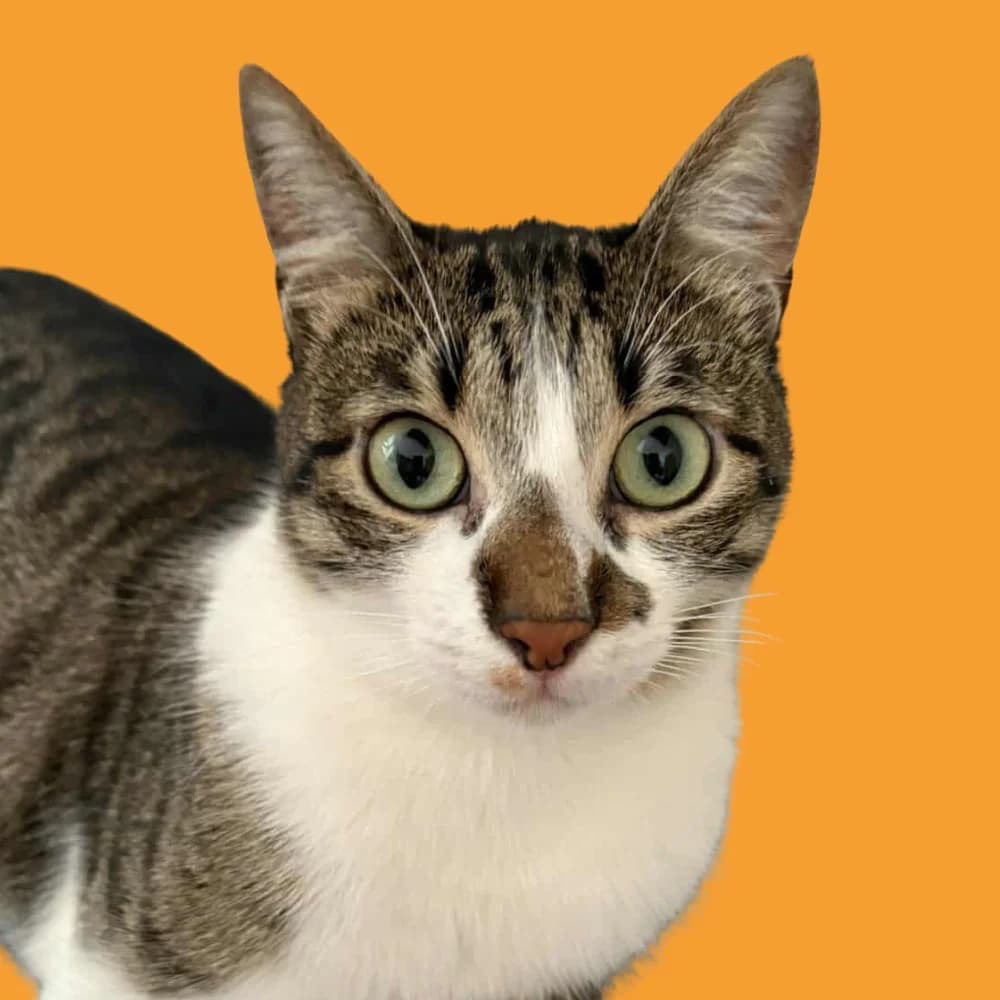
Zoenika is not a straightforward special needs adoption. She has severe cerebellar hypoplasia, commonly known as CH, but CH alone does not adequately describe the extent of her neurological difficulties. Cerebellar hypoplasia affects the part of the brain responsible for coordination and balance. In many cats, CH is a stable condition that does not progressively worsen. Zoenika’s situation is considerably more complicated because she also has epilepsy and evident neurological damage. Her carer describes her as less a cat who simply has very severe CH and more a cat living with epilepsy and brain damage alongside severe CH. One of the most significant parts of Zoenika’s daily care involves her bladder. Interestingly, she appears to understand when her bladder is full. She knows that she needs to urinate and can communicate this to her carer, so she is always given the opportunity to try by herself first. Occasionally, she succeeds. Most of the time, however, Zoenika cannot release the urine independently and her bladder needs to be manually expressed for her. The precise neurological reason for this has not been established. There appears to be a problem somewhere in the process that allows her to relax the appropriate muscles and empty her bladder, despite her recognising that she needs to go. This means bladder care cannot simply be left to see whether she eventually manages by herself. Her future carer would need to be confident learning how to express her bladder correctly and following veterinary guidance regarding her urinary care. Zoenika also experiences seizures. Some are relatively short, lasting around thirty seconds, and these can sometimes occur one after another. However, she has also experienced multiple much longer seizures lasting more than two minutes. During some of these prolonged seizures, her bladder has emptied completely. Her seizures are not an occasional historical issue. They remain an active and significant part of her condition, and she has experienced days with multiple short seizures. She is receiving medication, but her neurological difficulties remain substantial. There are also concerns that Zoenika is deteriorating. Her carer has observed changes that suggest the effects of her neurological problems and previous seizure activity are becoming increasingly evident. This makes it impossible to promise a predictable future or suggest that her needs will remain exactly as they are today. Anyone considering Zoenika must therefore approach her adoption with a realistic understanding of what caring for her involves. She needs medication to be administered reliably and exactly as prescribed. Her seizures need to be monitored carefully, including their frequency, duration and any changes in their presentation. Her bladder needs regular attention, and her carer must recognise when she is communicating that she needs to urinate and then assist her when she cannot manage independently. Her environment also needs to take her severe CH into consideration. A cat with significant problems controlling movement needs surroundings designed around safety and accessibility. Essential resources such as food, water, resting areas and toileting facilities need to be easy for her to access without unnecessary obstacles or opportunities for injury. Most importantly, Zoenika needs an adopter who is comfortable caring for a cat whose medical needs may change. Her future cannot be predicted with certainty. Her neurological condition requires ongoing veterinary involvement, and decisions about her care will need to continue being based on her individual needs and quality of life. Zoenika therefore needs a very particular home. Experience with neurological cats, epilepsy, bladder expression or other complex medical needs would be extremely valuable. Someone without that previous experience would need to be completely committed to learning the necessary practical care from veterinary professionals and understanding that this will be part of everyday life with her. This is not an adoption where her medical difficulties should be minimised in the hope of finding her a home more easily. Zoenika requires substantial hands on care. She has severe CH, recurrent seizures, neurological damage and difficulty emptying her bladder independently. Her condition may continue to change, and her adopter needs to be emotionally, practically and financially prepared for ongoing veterinary treatment and potentially increasing levels of support. For the right person, the focus will not be on expecting Zoenika to become an easier or more independent cat. It will be on understanding the cat she is now, responding as her needs change, keeping her comfortable and safe, and making her quality of life the priority throughout her care.
Gelist vandaag