Adotar Honey
Beagle · Desconhecido · Cachorro · Idade desconhecida
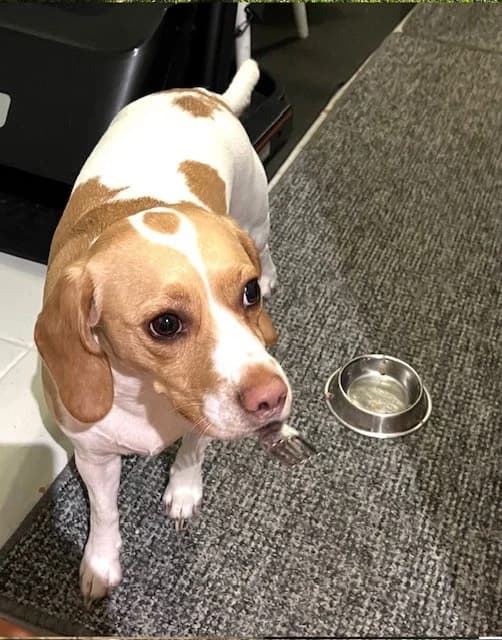
Honey é uma linda cadela de raça Beagle, tricolor, pesando 11,6 kg. Ela é uma jovem energética e muito ativa, que adora brincar, especialmente de cabo de guerra, e é muito motivada por comida, um verdadeiro traço da raça Beagle! Ela é especialmente fã de qualquer coisa com sabor a peixe, incluindo pele de peixe seca e salmão. Treinamento e Comportamento. Honey ainda não participou de aulas de treinamento formal. Ela é levada com coleira, embora tenha tendência a puxar; ela caminha melhor quando usa um Halti. Ela pode ser reativa em relação a cães quando está com a coleira, latindo e avançando, mas seus donos viram alguma melhora usando o Halti e trabalhando para fazê-la olhar para eles em busca de orientação. Ela pode ser cautelosa com homens e pessoas usando capuzes, especialmente no escuro. Honey é treinada para fazer as necessidades, embora quando fica ansiosa possa ter acidentes. Ela não é destrutiva. Ela tem ansiedade de separação e confinamento e atualmente não pode ficar sozinha. Seus donos conversaram com um especialista em comportamento canino, que desaconselhou o uso de uma caixa de transporte devido à sua ansiedade de confinamento. Eles estabeleceram gradualmente a caixa como um lugar seguro à noite, e Honey dorme nela à noite, embora possa levar muito tempo para se acalmar. Eles descobriram que ela progrediu mais quando não estava confinada. Honey viaja bem de carro com alguém que ela conhece. Ela não é solta. Outros Cães Honey atualmente não consegue viver em segurança com outro cão. Seus donos a descrevem como uma jogadora extremamente energética e persistente, com pouca capacidade de desligar. Se o cão residente se afastar porque ela teve o suficiente, Honey o seguirá, o morderá e continuará a interação. Ela também mordeu o outro cão, fazendo-o gritar, incluindo quando estava em sua cama ou tentando fugir. O comportamento tornou-se mais frequente à medida que Honey se estabeleceu em seu lar atual, apesar da intervenção de seus donos, redirecionando-a e dando-lhe oportunidades para se acalmar. O cão residente teve que ser colocado em uma caixa para mantê-lo seguro. Honey brincou com os cães de amigos e essas interações foram supostamente boas, embora seu jogo possa ser muito áspero e energético. Ela também guarda comida em torno de outros cães. Por essas razões, Honey precisa ser o único cão em seu novo lar. Seus futuros donos precisarão entender seu estilo de jogo, reconhecer quando ela está ficando muito agitada e ajudá-la a aprender a se acalmar. Gatos Honey's owners say she doesn't chase cats. She is interested in saying hello but will then wander off. However, her separation anxiety and unsettled behavior have been stressful for the elderly cat in her current home. Any potential home with cats would therefore need careful consideration, with the welfare and wellbeing of the resident cat a priority. Health Honey has been examined by her vet to investigate whether pain could be contributing to her behavior. Blood tests and a urine analysis were also carried out, with no problems identified. She experiences separation and confinement anxiety and is currently prescribed Reconcile 16mg (fluoxetine). Her medication and behavioral support will need to continue under veterinary guidance. Honey is not spayed. Her owners believe her last season was approximately four months ago. Her vaccination history is reported to be up to date, but the date of her last vaccination is unknown. She was last dewormed on September 1, 2026 and is microchipped. Honey's Ideal Home Honey needs a patient, understanding and committed home with the time to help her work through her anxiety and develop the ability to settle. She cannot currently be left alone, so her new owners will need to be able to provide the company and gradual support she needs. She must be the only dog in the household, as she is not currently able to share a home safely with another dog. Any home with cats would need careful assessment. Honey has lots of energy, loves interaction and is highly responsive to food-based training. With consistency, appropriate behavioral support and an environment that meets her needs, we hope she can make progress and enjoy a happier, more settled life.
Ler o original (en)
Honey is a pretty tri-coloured Beagle girl, weighing 11.6kg. She is a lively, energetic young dog who loves to play, particularly tug-of-war, and is very food motivated – a real Beagle trait! She is especially fond of anything fishy, including dried fish skin and salmon. Training and Behaviour. Honey has not yet attended formal training classes. She is walked on a harness, although she tends to pull; she walks better when wearing a Halti. She can be reactive towards dogs when out on lead, barking and lunging, but her owners have seen some improvement using the Halti and working on getting her to look towards them for guidance. She can be wary of men and people wearing hoods, particularly in the dark. Honey is housetrained, although when she becomes anxious she may have accidents. She is not destructive. She has separation and confinement anxiety and currently cannot be left alone. Her owners have spoken with a dog behaviourist, who advised against crate training because of her confinement anxiety. They have gradually established the crate as a safe place in the evenings, and Honey will sleep in it overnight, although she can take a long time to settle. They have found that she has made better progress when not confined. Honey travels well in the car with someone she knows. She is not let off lead. Other Dogs Honey is currently unable to live safely with another dog. Her owners describe her as an extremely energetic and persistent player, with little ability to switch off. If the resident dog moves away because she has had enough, Honey will follow, nip at her and continue the interaction. She has also bitten the other dog, causing her to yelp, including when she is on her bed or trying to get away. The behaviour has become more frequent as Honey has settled into her current home, despite her owners intervening, redirecting her and giving her opportunities to calm down. The resident dog has had to be crated to keep her safe. Honey has played with friends’ dogs and these interactions have reportedly been fine, although her play can be very rough and energetic. She also guards food around other dogs. For these reasons, Honey needs to be the only dog in her new home. Her next owners will need to understand her play style, recognise when she is becoming over-aroused and help her learn to settle. Cats Honey’s owners say that she does not chase cats. She is interested in saying hello but will then wander off. However, her separation anxiety and unsettled behaviour have been stressful for the elderly cat in her current home. Any potential home with cats would therefore need careful consideration, with the welfare and wellbeing of the resident cat a priority. Health Honey has been examined by her vet to investigate whether pain could be contributing to her behaviour. Blood tests and a urine analysis were also carried out, with no problems identified. She experiences separation and confinement anxiety and is currently prescribed Reconcile 16mg (fluoxetine). Her medication and behavioural support will need to continue under veterinary guidance. Honey is not spayed. Her owners believe her last season was approximately four months ago. Her vaccination history is reported as up to date, but the date of her last vaccination is unknown. She was last wormed on 1 September 2026 and is microchipped. Honey’s Ideal Home Honey needs a patient, understanding and committed home with the time to help her work through her anxiety and develop the ability to settle. She cannot currently be left alone, so her new owners will need to be able to provide the company and gradual support she needs. She must be the only dog in the household, as she is not currently able to share a home safely with another dog. Any home with cats would need careful assessment. Honey has lots of energy, loves interaction and is highly responsive to food-based training. With consistency, appropriate behavioural support and an environment that meets her needs, we hope she can make progress and enjoy a happier, more settled life.
Listado há 2 semanas