Adoptar a Hal
Macho · Adulto · 5 años
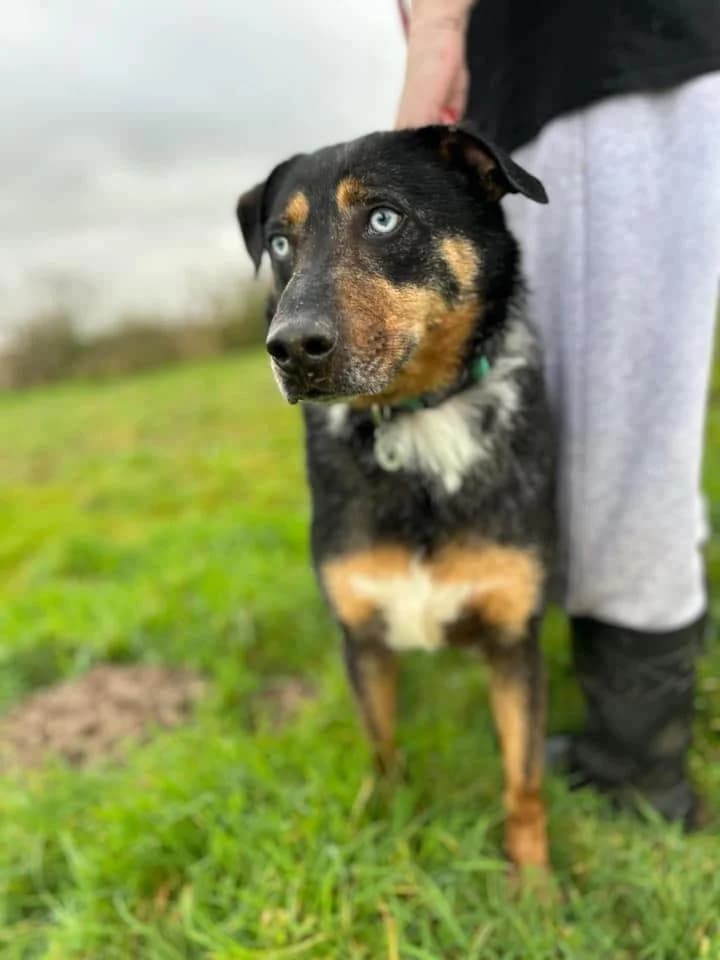
Hal es un cruce de pastor alemán de tamaño mediano a grande, de unos dos años de edad. Siente un interés excesivo por el gato. Hal se lleva bien con algunos perros, pero parece preferir su espacio personal y no tiene mucha paciencia con los más jóvenes de la manada. Hal se lleva bien con niños respetuosos de cualquier edad. Lo encontramos durante nuestra luna de miel, cuando apareció en el complejo donde nos alojábamos en circunstancias bastante misteriosas. Tenía el pelaje apelmazado por una especie de sustancia pegajosa y le habían afeitado algunas zonas. Fue el callejero más fácil de atrapar y rescatar que hemos conocido, ya que literalmente se hacía amigo de cualquiera. Hal se lleva bien con algunos perros, pero parece preferir su espacio personal y no tiene mucha paciencia con los más jóvenes de la manada. También siente un interés excesivo por el gato. Es maravilloso con las personas y adora a hombres, mujeres y niños por igual. Fue un éxito entre los turistas del complejo, que nos paraban para decirnos lo contentos que estaban de que nos fuéramos a quedar con él al final de nuestras vacaciones y le buscáramos un hogar adecuado y lleno de cariño. Podría convivir con niños respetuosos de cualquier edad, pero actualmente salta para pedir abrazos (estamos intentando desalentarlo), por lo que podría tirar a niños muy pequeños. Es un perro guapísimo que tiene mucho amor que dar, y cualquier amante de los pastores tendría suerte de adoptarlo. Hal está en acogida con Norwich Norfolk. Si te interesa, escribe o llama de 9:00 a 17:00, de lunes a viernes, o de 9:00 a 16:00 los sábados. Tarifas de donación por adopción: los cachorros ya castrados y todos los perros adultos: £430. Cachorros no castrados con contrato de esterilización: £530 (recibirás un reembolso de £100 al enviarnos una prueba de la castración). Perros senior (10 años o más): entre £150 y £250 (según la edad y las necesidades individuales). Términos y condiciones de adopción Cuando adoptas un perro de Safe Rescue, DEBES usar una correa de deslizamiento. Esto mantendrá a tu perro a salvo: tu nuevo perro estará nervioso y no confiará en ti, y no sabrás qué situaciones podrían alterarlo. Si tu perro entra en pánico, la correa de deslizamiento es la única forma de evitar que escape (muchos perros pueden escaparse de un collar o un arnés). Tu perro necesitará AL MENOS de 3 a 6 meses para adaptarse y para que llegues a conocerlo por completo (más tiempo en el caso de los perros nerviosos). La correa de deslizamiento DEBE usarse SIEMPRE durante este período de adaptación. Incluso cuando tu perro ya esté adaptado, es más seguro usar la correa de deslizamiento en situaciones en las que pueda asustarse (por ejemplo, al visitar lugares nuevos, en presencia de personas desconocidas o en el veterinario) y en situaciones en las que puedan surgir desencadenantes inesperados (por ejemplo, durante la noche de la hoguera). Los perros nerviosos pueden necesitar llevar siempre una correa de deslizamiento como medida de seguridad adicional. La correa de deslizamiento es un dispositivo de seguridad y NUNCA debe usarse como herramienta de adiestramiento. Ejercer presión sobre el cuello del perro con la correa es perjudicial. Si tu perro tira de la correa, podemos asesorarte sobre métodos de adiestramiento que no causen daño. Una vez que tu perro esté adaptado, puedes considerar usar un arnés (junto con la correa de deslizamiento) si se siente cómodo siendo manipulado al colocárselo. La mayoría de los arneses no son a prueba de escapes, pero los arneses con una correa detrás de la caja torácica (por ejemplo, los arneses Ruffwear Webmaster o Perfect Fit) son más seguros. Nunca se deben usar correas extensibles o retráctiles con nuestros perros. Los perros adoptados deben recogerse en la protectora y trasladarse directamente a casa en una jaula metálica segura. Las vallas y puertas deben tener una altura mínima de 5 pies (aproximadamente 1,5 m) y ser seguras.
Leer original (en)
Hal is a medium to large German shepherd cross aged around two years old. He has an unhealthy interest in the cat. Hal is ok with some dogs but seems to like his own personal space and doesn’t have much patience for the youngsters in the pack. respectful children of any age. We found Hal on our honeymoon after he turned up at the complex we were staying in under quite mysterious circumstances. His coat was congealed with some kind of sticky substance and he’d been shaved in places. He was the easiest stray ever to catch and rescue as he would literally befriend anyone. Hal is ok with some dogs but seems to like his own personal space and doesn’t have much patience for the youngsters in the pack. He also has an unhealthy interest in the cat. He is amazing with people and loves men, women and children alike. He was a hit with the holiday makers at the complex who all stopped us and told us how happy they were that we would take him at the end of our holiday and find him a proper loving home. He could live with respectful children of any age but he does currently jump up for cuddles (we are discouraging this) so may knock over very small children. He’s just a super handsome dog with so much love to give and any shepherd lover would be lucky to adopt him. Hal fostered Norwich Norfolk If you are interested please message or call between 9am to 5pm Mon – Fri or 9am to 4pm Sat. . Adoption Donation Fees are Puppies already neutered and all adult dogs: £430. Un-neutered puppies on spay/neuter contracts: £530 (You will receive a £100 rebate once you send us proof of neutering). Senior dogs (10+ years): £150–£250 (depending on age and individual needs). Adoption Terms & Conditions When you adopt a Safe Rescue dog, you MUST use a slip lead. This will keep your dog safe: your new dog will be nervous and will not trust you, and you will not know which situations might upset your dog. If your dog panics, then a slip lead is the only way to prevent your dog from escaping (many dogs can escape from a collar and/or harness). It will take AT LEAST 3-6 months for your dog to settle-in and for you to know your dog fully (longer for nervous dogs). The slip lead must ALWAYS be used during this settling-in period. Even after your dog is settled, it is safest to use the slip lead in situations where your dog may become scared (e.g. visiting new places, around unfamiliar people, at the vet), and it situations where unexpected triggers might happen (e.g. around bonfire night). Nervous dogs may always need to wear a slip-lead as a back-up safety measure. The slip lead is a safety device and must NEVER be used as a training tool. Using the lead to apply pressure to the dog’s neck is damaging. If your dog pulls on the lead, then we can advise you on training methods that avoid harm. Once your dog is settled, you may want to consider using a harness (together with the slip lead) if your dog is comfortable with being handled when it is fitted. Most harnesses are not escape-proof, but harnesses with a strap behind the ribcage (e.g. Ruffwear Webmaster or Perfect Fit Harnesses) are safer. Retractable / extendable leads must never be used on our dogs. Adopted dogs must be collected from the rescue and transported straight home in a secure metal crate. Fences and gates must be 5foot minimum in height and secure. Hal is a medium to large German shepherd cross aged around two years old. He has an unhealthy interest in the cat. Hal is ok with some dogs but seems to like his own personal space and doesn’t have much patience for the youngsters in the pack. respectful children of any age. We found Hal on our honeymoon after he turned up at the complex we were staying in under quite mysterious circumstances. His coat was congealed with some kind of sticky substance and he’d been shaved in places. He was the easiest stray ever to catch and rescue as he would literally befriend anyone. Hal is ok with some dogs but seems to like his own personal space and doesn’t have much patience for the youngsters in the pack. He also has an unhealthy interest in the cat. He is amazing with people and loves men, women and children alike. He was a hit with the holiday makers at the complex who all stopped us and told us how happy they were that we would take him at the end of our holiday and find him a proper loving home. He could live with respectful children of any age but he does currently jump up for cuddles (we are discouraging this) so may knock over very small children. He’s just a super handsome dog with so much love to give and any shepherd lover would be lucky to adopt him. If you are interested please message or call between 9am to 5pm Mon – Fri or 9am to 4pm Sat. . Adoption Donation Fees are Puppies already neutered and all adult dogs: £430. Un-neutered puppies on spay/neuter contracts: £530 (You will receive a £100 rebate once you send us proof of neutering). Senior dogs (10+ years): £150–£250 (depending on age and individual needs). When you adopt a Safe Rescue dog, you MUST use a slip lead. This will keep your dog safe: your new dog will be nervous and will not trust you, and you will not know which situations might upset your dog. If your dog panics, then a slip lead is the only way to prevent your dog from escaping (many dogs can escape from a collar and/or harness). It will take AT LEAST 3-6 months for your dog to settle-in and for you to know your dog fully (longer for nervous dogs). The slip lead must ALWAYS be used during this settling-in period. Even after your dog is settled, it is safest to use the slip lead in situations where your dog may become scared (e.g. visiting new places, around unfamiliar people, at the vet), and it situations where unexpected triggers might happen (e.g. around bonfire night). Nervous dogs may always need to wear a slip-lead as a back-up safety measure. The slip lead is a safety device and must NEVER be used as a training tool. Using the lead to apply pressure to the dog’s neck is damaging. If your dog pulls on the lead, then we can advise you on training methods that avoid harm. Once your dog is settled, you may want to consider using a harness (together with the slip lead) if your dog is comfortable with being handled when it is fitted. Most harnesses are not escape-proof, but harnesses with a strap behind the ribcage (e.g. Ruffwear Webmaster or Perfect Fit Harnesses) are safer. Retractable / extendable leads must never be used on our dogs. Adopted dogs must be collected from the rescue and transported straight home in a secure metal crate. Fences and gates must be 5foot minimum in height and secure.
Publicado el mes pasado