Skip to content
TailHarbor
← Back to results
Available

Comment le chien fait pour délimiter son territoire

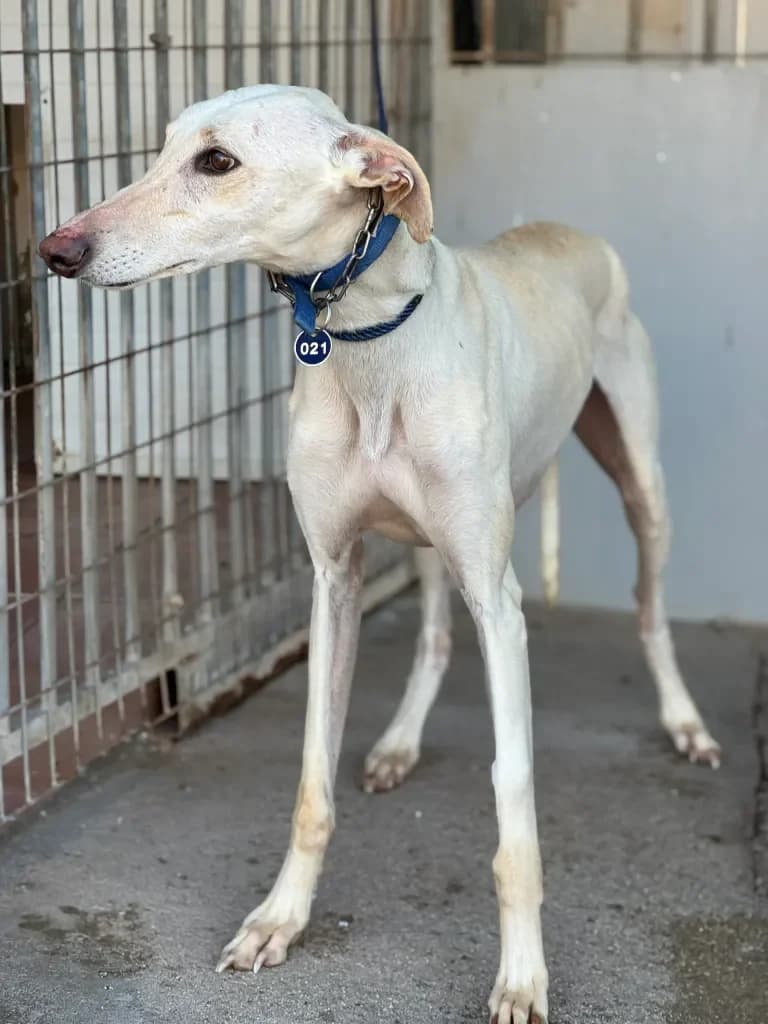
Mixed Breed · Male · Puppy · 4 months

After being adopted, the dog or puppy will try to find its bearings in the house and its environment. It will therefore be essential to ensure that the dog finds its place and to make sure it is well familiar with its landmarks in order to provide it with good stability and balance within your family. In nature, in the house, or outside, the dog will delimit its territory differently. A useful fact! In nature, the dog lives in a pack, so their territory is divided into three parts, with the center occupied by the dominant members of the pack. Then there is the intermediate zone, occupied by male candidates for dominance along with the females, and then there is the peripheral zone where young males develop. Puppies and their mother have something else, because puppies will establish their territory around their mother. Once they are grown, the mother will push them to explore other areas of the pack. Obviously, domesticated dogs do not behave in a similar way, but some traces of these behaviors remain in them. Once arrived at home, the dog or puppy will try to delimit its territory. Indeed, it is a territorial animal and its owner will have to help it in its quest. Thus, it will want a feeding area, a area for going potty and its resting moments, as well as a place where it can do its business. Its owner must accompany it to set these areas with it. This will obviously be part of its education. It is clear that the dog should not appropriate its owner's chair or the bed for its territory. It will also be necessary to teach the dog to respect the boundaries of the areas you grant it. Once outside, the outside of the house will also be the dog's territory. This notion is indeed very present in our four-legged friends. Even as a pet, the dog will thus try to protect its territory against strangers, such as passersby, the postman, or visitors. To ensure the protection of its territory, the dog will become threatening towards all strangers, whether human or other individuals of the same breed.

FR·Show original

Après son adoption, le chien ou bien le chiot cherchera à trouver ses repères dans la maison ainsi que dans son environnement. Il sera donc indispensable de veiller à ce que le chien trouve sa place et de faire en sorte bien connaître ses points de repères afin de lui assurer une bonne stabilité et un bon équilibre au sein de votre famille. Dans la nature, dans la maison ou à l’extérieur, le chien délimitera son territoire de manière différente. Bon à savoir ! Dans la nature, le chien vit en meute, ainsi leur territoire se sépare en trois parties dont le centre que les dominants de la meute occupent. Il y a ensuite la zone intermédiaire que les mâles aspirants à être dominants occupent avec les femelles et ensuite il y a la zone en périphérie où les jeunes mâles évoluent. Les chiots et leur mère possèdent autre chose, car les chiots vont mettre en place leur territoire autour de leur mère. Une fois qu’ils seront grands, la mère va ainsi les pousser à explorer les autres territoires de la meute. Bien évidemment, les chiens domestiqués ne se comportent pas de manière similaire, il reste cependant quelques empreintes de ces comportements chez eux. Une fois arrivé dans la maison, le chien ou le chiot cherchera à délimiter son territoire . En effet c’est un animal territorial et il faudra donc que son maître l’aide dans sa quête. Ainsi, il voudra avoir sa zone de repas, une zone pour les dodos et ses moments de repose et aussi un endroit pour qu’il fasse ses besoins. Son maître devra l’accompagner pour délimiter ces zones avec lui. Cela fera bien évidemment partie de son éducation. Il est évident que le chien ne devra pas s’approprier le fauteuil de son maître ou encore le lit pour son territoire. Il faudra aussi apprendre au chien à respecter les limites des zones que vous lui accorderez. Une fois à l’extérieur L’extérieur de la maison sera également pour le chien son territoire. Cette notion est en effet très présente chez nos amis à quatre pattes. Même étant un animal de compagnie , le chien cherchera ainsi à protéger son territoire contre les étrangers dont les passants, le facteur ou encore les visiteurs. Pour assurer ainsi la protection de son territoire , le chien deviendra menaçant envers tous les étrangers que ce soit humain ou les autres individus de même race.

Size
Large
Age
Puppy · 4 months
Location
🇫🇷Paris
Shelter
CaniMinet
Cared for by CaniMinet · ParisLearn about Mixed Breed

Listed 2 months ago

Bringing Comment le chien fait pour délimiter son territoire home

What you'll need for Comment le chien fait pour délimiter son territoire in week one.

Hand-picked · prices indicative

  1. 01
    Required by most shelters

    Trixie Transport Box

    Sturdy plastic carrier — what most shelters require for pickup.

    View on Amazon
    €35–45
  2. 02
    Editor's pick

    Folding Wire Crate

    First-week safe space. Shelter dogs settle faster with a crate.

    View on Amazon
    €50–80
  3. 03
    Legal · EU

    Car Seatbelt Tether

    Legally required in most EU countries for transporting dogs.

    View on Amazon
    €8–12
  4. 04

    Adaptil Calming Spray

    Dog-specific pheromone diffuser. Worth it for the trip home.

    View on Amazon
    €18–25
  5. 05

    Orthopaedic Dog Bed

    Worth the upgrade — rescues often have joint issues from kennels.

    View on Amazon
    €30–60
  6. 06
    Safer than a collar

    Padded Y-Front Harness

    Escape-proof for spooky rescues. Safer than a collar in week one.

    View on Amazon
    €20–35

§ Affiliate links · TailHarbor earns a small commission, no extra cost to you.

About Comment le chien fait pour délimiter son territoire

What life with Comment le chien fait pour délimiter son territoire looks like

Comment le chien fait pour délimiter son territoire is a large puppy/kitten mixed breed dog waiting at CaniMinet in Paris.

Puppies need routine, gentle socialization, and roughly two short outings a day for the first year. The first six months are the formative window — house-training, leash work, and quiet exposure to traffic, other dogs, and unfamiliar people happen now or not at all. Expect early-morning wake-ups and a few months of chewing.

🇫🇷Adopting from France

French refuges follow the SPA framework: adopters sign a cession contract that includes sterilization, vaccinations, microchip identification, and rabies passport. Fees are typically €150–€300. Many refuges work with rescue transport partners for cross-border placements.

Paris, France browse more dogs in France.

Frequently asked

Adopting Comment le chien fait pour délimiter son territoire, answered.

How do I contact the shelter about Comment le chien fait pour délimiter son territoire?
Use the phone, email, or website link in the sidebar of this page. CaniMinet handles screening and the adoption contract directly — TailHarbor doesn't broker the conversation. When you reach out, mention you saw Comment le chien fait pour délimiter son territoire on TailHarbor so they know which animal you're asking about.
Can I adopt Comment le chien fait pour délimiter son territoire if I live in another country?
Yes, in most cases. Rescues across Europe routinely place animals abroad — CaniMinet will tell you what they need (EU pet passport, rabies titer, transport coordination) and whether they handle transport themselves or refer you to a partner. Plan for an extra €100–€350 in transport costs depending on distance.
Is Comment le chien fait pour délimiter son territoire already vetted, vaccinated, and chipped?
Most dogs on TailHarbor leave their shelter with sterilization, current vaccinations, microchip ID, and an EU pet passport included in the adoption fee. The vet status on this page reflects what the shelter has reported — ask them directly if you need details on specific vaccines, recent bloodwork, or chronic conditions.
What happens if Comment le chien fait pour délimiter son territoire isn't the right fit?
Every reputable rescue accepts an animal back if the adoption genuinely doesn't work — that's part of the standard contract. Talk it through with CaniMinet early rather than rehoming privately; they know Comment le chien fait pour délimiter son territoire and can place them more successfully than a second-hand listing can.
Why does the description sometimes read awkwardly?
TailHarbor translates shelter descriptions into English from the source language (FR). Translation is imperfect — names of streets, donors, and shelter-specific terms occasionally slip through unidiomatically. For the cleanest read, click the source link to see the shelter's original page.
You might also like

More Mixed Breed pets

Zoey,  Mixed Breed for adoption at Schronisko Zabrze, Zabrze

Zoey

Mixed Breed

Unknown
Zmorka, female senior Mixed Breed for adoption at Schronisko Zabrze, Zabrze

Zmorka

Mixed Breed

9 yearsFemale
Zivka,  Mixed Breed for adoption at Schronisko Zabrze, Zabrze

Zivka

Mixed Breed

Unknown

More from CaniMinet

Un distributeur programmable pour votre chien,  Mixed Breed for adoption at CaniMinet, Paris

Un distributeur programmable pour votre chien

Mixed Breed · small

Unknown
L’anxiété chez le chat,  Mixed Breed for adoption at CaniMinet, Paris

L’anxiété chez le chat

Mixed Breed · large

Unknown
La vaccination du chien, male puppy Mixed Breed for adoption at CaniMinet, Paris

La vaccination du chien

Mixed Breed · medium

2 monthsMale
Similar animals

More Mixed Breeds looking for a home

Spotted something wrong? Suggest a change →