FeLV bei Katzen
Mixed Breed · Unknown
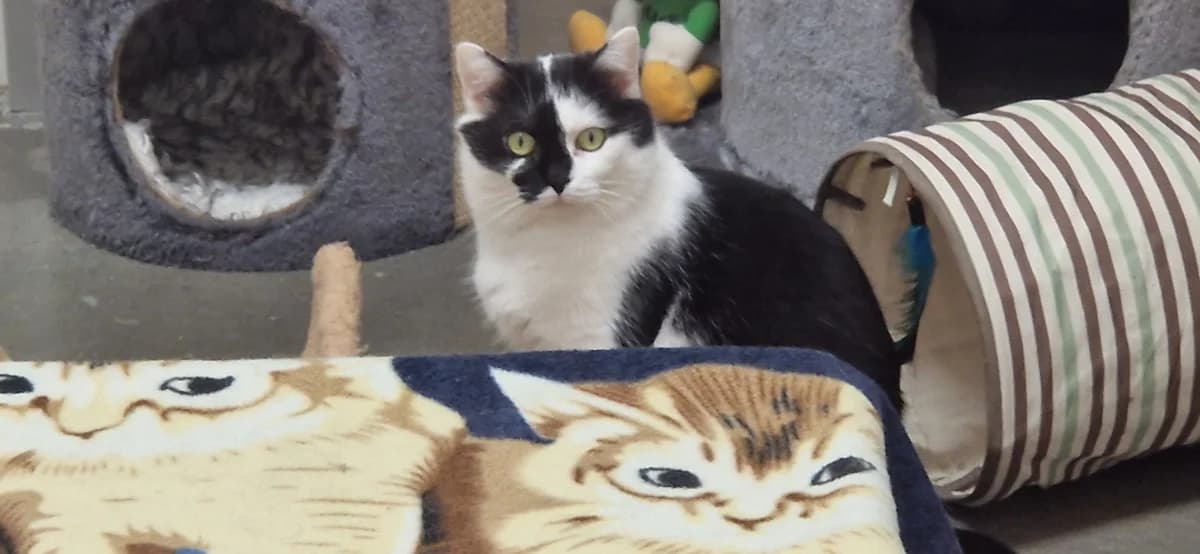
What is FeLV? Can or do I want to give a home to an FeLV-positive cat? What comes with a FeLV-positive cat? You are not sure if you want to give a home to an FeLV-positive cat or cats? Whether you know anything about FeLV or know it well: We want to help you with our information to make a decision. After reading, you should be able to answer the question "Can or do I want to give one or two or three ... FeLV-positive cats a home?" And it's not about scientific information. We deal with practical questions plus a basic understanding of FeLV. With this, after reading, you should be able to roughly assess how living with an FeLV-positive cat will be or can be. What is FeLV actually? How do cats get FeLV? How can I test whether my cat is FeLV-positive or not? What if one of my cats is positive and the other is not? Living with an FeLV-positive Cat Is the FeLV virus contagious to me or other pets? Does the cat need constant medication or treatments? What should I pay special attention to with my FeLV-positive cat? Can I vaccinate my FeLV-positive cat? Do FeLV-positive cats have a shorter life expectancy? A few personal words What is FeLV actually? FeLV is a virus and is fully named "Feline Leukemia Virus." The name is somewhat misleading, because an FeLV-positive cat does not automatically have leukemia, which is blood cancer. She is only infected with a virus that can cause other diseases, including leukemia. FeLV is also commonly referred to as leukemia, which is simply incorrect, as leukemia is another term for leukemia. FeLV-positive cats are not sick. They have only a higher risk of becoming sick. The FeLV virus is found all over the world. Depending on how cats live in countries, how well and consistently they are tested, how many and unattended the number of stray cats is, whether people let their positive cats roam freely ... so different is also the number of tested positive cats. In Germany, there are not as many FeLV-positive cats looking for a home as, for example, in Spain. But not all cases in Germany are known. Many animal shelters, animal welfare societies, and veterinarians do not test at all or only in suspected cases, while in Spain, most societies, animal shelters, and veterinarians already test cats upon first intake. Once a cat is chronically infected with the FeLV virus, there is unfortunately no way for the cat to get rid of the virus. Like all viruses, there are also no medications that can destroy the FeLV virus. So no, once chronically infected, the cat remains FeLV-positive. How do cats get FeLV? The virus is transmitted from cat to cat. Every chronically infected cat can shed the virus through saliva, feces, urine, blood, and milk. However, the FeLV virus survives only a few minutes in the environment at normal temperatures. Therefore, the risk that another cat gets infected with FeLV because they share the same litter box, food bowl, or water bowl is low. Most often, a cat gets infected through direct contact with another infected cat through saliva, such as during mutual grooming. Freshly infected cats can also successfully fight off and completely eliminate the FeLV virus. Like all infections, the immune system can also fight here successfully, even so successfully that a cat can become immune to the FeLV virus without ever being vaccinated. However, the transmission of cats living together is never excluded. Therefore, you should not house an FeLV-positive cat with an FeLV-negative cat. How can I test whether my cat is FeLV-positive or not? To find out if a cat is chronically infected with the FeLV virus, there are two possible testing methods. One is the ELISA test method, which is available as a quick test at the vet or as a lab test. The other test method is the PCR test, which is only available as a lab test. ELISA tests cannot find the virus itself but only the virus's antigen. The PCR test, on the other hand, finds the virus itself. Because there are cases where the ELISA test cannot detect the antigen, but the PCR test still can detect the virus, the PCR is always the first choice. With both methods, the virus can only be detected six to eight weeks after infection (incubation period). What if one of my cats is positive and the other is not? In such a case, the first question to ask is whether you can separate the cats because they might not get along well or because the FeLV-negative cat might be better off in a new home. In this case, your FeLV-negative cat goes to a new home, and the FeLV-positive cat stays with you. The other way around, the chance that your FeLV-positive cat might be able to find a new home is very small, as there are not enough homes for FeLV-positive cats. This cat needs outdoor access. Best placed with a resident cat (second-cat home).
DE·Show original
Was ist FeLV? Kann oder möchte ich einer FeLV positiven Katze ein Zuhause geben? Was kommt da auf mich zu mit einer FeLV positiven Katze? Du bist Dir nicht sicher, ob Du einer FeLV positiven Katze oder Katzen ein Zuhause geben möchtest? Egal, ob Du Dich mit FeLV gar nicht auskennst, etwas oder richtig gut: Wir wollen Dir mit unseren Infos helfen, eine Entscheidung zu treffen. Du sollst nach dem Lesen für Dich selbst die Frage „Kann oder möchte ich einer oder zwei oder drei … FeLV positiven Katzen ein Zuhause geben?“ beantworten können. Und dabei geht es nicht um rein wissenschaftliche Informationen. Wir beschäftigen uns hier mit den praktischen Fragen plus ein Grundwissen zu FeLV. Damit sollst Du nach dem Lesen in etwa einschätzen können, wie das Zusammenleben mit einer FeLV positiven Katze sein wird bzw. kann. Was ist FeLV eigentlich? Wie stecken sich Katzen mit FeLV an? Wie kann ich testen, ob meine Mieze FeLV positiv ist oder nicht? Was ist, wenn eine meiner Katzen positiv ist und die andere nicht? Das Zusammenleben mit einer FeLV positiven Katze Ist der FeLV Virus ansteckend für mich oder andere Haustiere? Braucht die Katze ständig Medikamente oder Behandlungen? Auf was muss ich besonders achtgeben bei meiner FeLV positiven Mieze? Darf ich meine FeLV positive Katze impfen? Haben FeLV positive Katzen eine geringere Lebenserwartung? Noch ein paar persönliche Worte Was ist FeLV eigentlich? FeLV ist ein Virus und heißt vollständig „Felines Leukämie Virus“. Der Name ist etwas missverständlich, denn eine FeLV positive Katze hat nicht automatisch Leukämie, also Blutkrebs. Sie ist nur infiziert mit einem Virus, der neben anderen Erkrankungen auch Leukämie auslösen kann. FeLV wird umgangssprachlich auch oft als Leukose bezeichnet, was schlichtweg falsch ist, denn Leukose ist nur ein anderer Begriff für Leukämie. FeLV positive Katzen sind also nicht krank. Sie haben nur ein höheres Risiko, krank zu werden. Der FeLV Virus kommt in der ganzen Welt vor. Je nachdem wie die Katzen in den Ländern leben, wie gut und konsequent getestet wird, wie groß und unversorgt die Menge der Straßenkatzen ist, ob Leute ihren positiven Katzen Freigang geben … so unterschiedlich ist auch die Anzahl der positiv getesteten Katzen. In Deutschland gibt es nicht so viele FeLV positive Katzen, die ein Zuhause suchen, wie z. B. in Spanien. Es sind aber auch nicht alle Fälle in Deutschland bekannt. Zu viele Tierheime, Tierschutzvereine und auch Tierärzte testen gar nicht oder nur bei Verdachtsfällen, während in Spanien die meisten Vereine, Tierheime und auch Tierärzte die Katzen schon bei der Erstaufnahme testen. Wenn eine Katze sich erstmal chronisch mit dem FeLV Virus angesteckt hat, gibt es leider keine Möglichkeit, dass die Katze den Virus wieder los wird. Wie bei allen Viren gibt es auch noch keine Medikamente, die den FeLV Virus vernichten können. Also nein, einmal chronisch infiziert, bleibt die Katze auch dauerhaft FeLV positiv. Wie stecken sich Katzen mit FeLV an? Der Virus überträgt sich von Katze zu Katze. Jede dauerhaft infizierte Katze kann den Virus durch Speichel, Kot, Urin, Blut und Muttermilch ausscheiden. Allerdings überlebt der FeLV Virus in der Umgebung bei normalen Temperaturen nur wenige Minuten. Deshalb ist die Gefahr, dass sich eine andere Katze mit FeLV infiziert, weil sie die gleiche Toilette, den gleichen Futternapf oder den gleichen Wassernapf benutzt, gering. Meistens wird eine Katze infiziert durch den direkten Kontakt mit einer anderen infizierten Katze über ihren Speichel, also z. B. beim gegenseitigen Putzen. Frisch infizierte Katzen können den FeLV Virus aber auch erfolgreich bekämpfen und vollständig vernichten. Wie bei allen Infektionen kann sich auch hier das Immunsystem wehren, erfolgreich wehren, sogar so erfolgreich, dass eine Katze von sich aus immun gegen den FeLV Virus wird, ohne je geimpft worden zu sein. Eine gegenseitige Ansteckung von Katzen, die zusammenleben, ist jedoch nie ausgeschlossen. Daher solltest Du keine FeLV positiven mit FeLV negativen Katzen vergesellschaften. Wie kann ich testen, ob meine Mieze FeLV positiv ist oder nicht? Um herauszufinden, ob eine Katze chronisch mit dem FeLV Virus infiziert ist, gibt es zwei mögliche Testverfahren. Das eine ist das Elisa Testverfahren, dies gibt es in Form eines Schnelltests beim Tierarzt oder als Labortest. Das andere Testverfahren ist der PCR Test, den gibt es nur als Labortest. Die Elisa Tests können nicht den Virus selbst finden, sondern nur ein Anhängsel des Virus, das sogenannte Antigen. Der PCR Test hingegen findet den Virus selbst. Weil es Fälle gibt, in denen der Elisa Test das Antigen nicht nachweisen kann, der PCR aber immer noch den Virus nachweisen kann, ist der PCR immer die erste Wahl. Mit beiden Verfahren kann man den Virus aber erst sechs bis acht Wochen nach der Ansteckung nachweisen (Inkubationszeit). Was ist, wenn eine meiner Katzen positiv ist und die andere nicht? Bei so einem Fall muss als erstes die Frage gestellt werden, kannst Du die Katzen trennen, weil sie sich vielleicht sowieso nicht gut verstehen oder aus anderen Gründen die FeLV negative Katze besser ein neues Zuhause bekommen sollte. In diesem Fall zieht Deine FeLV negative Mieze in ein neues Zuhause und die FeLV positive Mieze bleibt bei Dir. Anders herum ist die Chance, dass Deine FeLV positive Mieze mal eben ein neues Zuhause bekommen kann, sehr gering, es gibt nicht genügend Zuhause für FeLV positive Miezen. Deshalb macht es nur Sinn, dass Deine negative Mieze auszieht, aber wirklich nur wenn sie nicht darunter leiden würde. Du kannst sie nicht trennen, weil die Miezen sich sehr mögen, ihr Zuhause sehr lieben und Deine FeLV negative Mieze leiden würde, wenn Du sie abgibst? Dann musst Du als Erstes sicher sein, dass Deine FeLV negative Mieze auch wirklich negativ ist. Wie das geht, beschreiben wir in dem Abschnitt über die Frage, wie getestet wird. Jetzt hast Du die Wahl, Du kannst darauf vertrauen, dass Deine negative Mieze einen dauerhaften Schutz gegen eine Ansteckung mit dem FeLV Virus entwickelt hat, also von sich aus immun ist. Das würde auch erklären, warum sie sich nicht angesteckt hat, wenn die beiden engen Kontakt hatten. Oder Du impfst Deine negative Mieze regelmäßig, am besten mit den entsprechenden Impfstoffen alle zwei bis drei Jahre. Dabei musst Du nur wissen, dass die Impfungen nicht fortgesetzt werden können und dürfen, wenn Deine FeLV negative Mieze irgendeine chronische Erkrankung bekommt, wie z. B. chronisches Nierenversagen. Ist der FeLV Virus ansteckend für mich oder andere Haustiere? Nein, der FeLV Virus kann nur Katzen infizieren. Es besteht überhaupt keine Gefahr für andere Tiere oder Menschen. Deine FeLV positive Mieze kann niemanden in ihrer Umgebung anstecken, egal ob jung, alt, gesund oder krank, nur eben andere Katzen. Braucht die Katze ständig Medikamente oder Behandlungen? Wenn die Katze nicht krank ist, dann nicht. Aber wenn sie krank wird, kann es sein, dass die Behandlung beim Tierarzt umfangreicher ist und Du mehr tun musst, um Deiner FeLV Mieze dabei zu helfen, wieder gesund zu werden. Vielleicht braucht sie dann für eine längere Zeit immunstärkende Zusätze übers Futter. Bei FeLV positiven Katzen kann ein ganz normaler Infekt einfach hartnäckiger sein und langwieriger verlaufen. Oft sind mehr Medikamente und mehr Zeit nötig, um der Katze zu helfen. Das gehört zum Risiko bei einer FeLV positiven Katze dazu. Auf was muss ich besonders achtgeben bei meiner FeLV positiven Mieze? Da gibt es nur eine Sache, Deine FeLV positive Mieze darf niemals ungesicherten Freigang haben. Sie könnte im Freilauf in der Gegend theoretisch eine andere Mieze anstecken. Ein abgesicherter Garten, ein gesicherter Balkon oder eine gesicherte Terrasse sind natürlich kein Problem, wenn auch keine Miezen von außen eindringen können. Ansonsten sind für die Gesundheit Deiner FeLV Mieze die gleichen grundsätzlichen Dinge wichtig wie für alle Katzen. Kein Stress,
- ✓Vaccinated
- ✓Good with cats
Listed 5 months ago