FIV chez le chat
Mixed Breed · Male · Kitten · 4 months
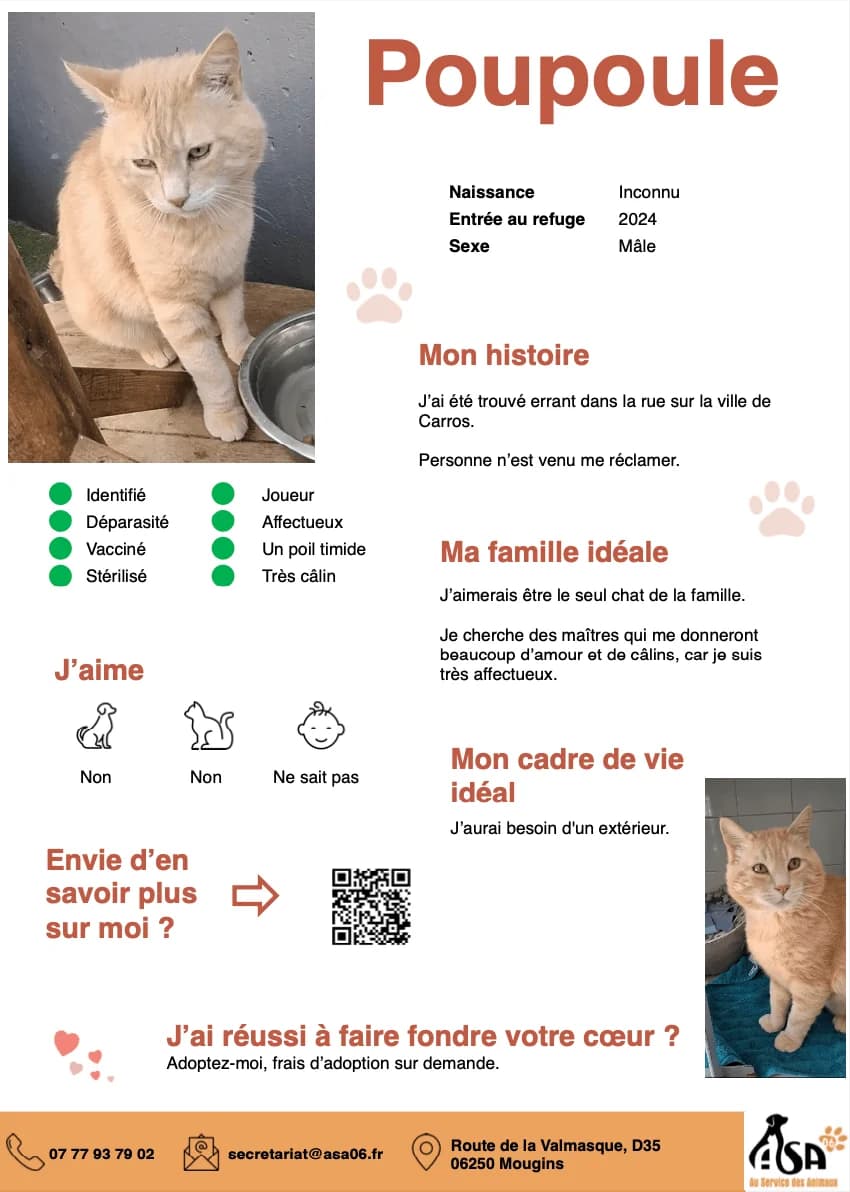
What is FIV? FIV (Feline Immunodeficiency Virus) is a virus that gradually weakens a cat's immune system. It is often called "cat AIDS," although the comparison mainly stops at the immune mechanism. Important and non-negotiable: it does not transmit to humans or other species. The virus simply makes the cat more susceptible to infections, but many cats remain healthy for years. How is FIV transmitted? Transmission primarily occurs through: deep bites (fights between cats, especially intact males) direct blood-to-blood contact no transmission through calm cohabitation no through food bowls, litter boxes or cuddles transmission from mother to kitten is possible but less frequent. In short, the typical scenario is the wanderer who has had a life a bit too rock 'n' roll. What are the symptoms? The trap is that... often there are none for a long time. When they do appear, you can observe: recurring infections (gums, skin, respiratory tract) dental problems (very common) But some FIV cats never develop severe signs. How is FIV diagnosed? A simple blood test at the veterinarian allows detection of antibodies. Sometimes, a confirmation test is recommended, especially in a cat recently exposed. Life expectancy of an FIV cat Contrary to the urban legend version "countdown," many FIV cats live: with an expectancy close to that of an uninfected cat especially if they live indoors and receive regular veterinary care The key factor is prevention of infections. Can an FIV cat live with other cats? Yes, in many cases. Reasonable conditions: Shelters and associations regularly do this without drama worthy of a catastrophic soap opera. Proof, on board the ark we have some that cohabit very well with their other animals of the same species and are adorable! What care for an FIV cat? No curative treatment for the virus, but simple management: quality diet regular veterinary care prompt treatment of infections indoor living recommended... but not mandatory good dental hygiene In short, we do what we should already do for any cat... a revolutionary concept. Should you adopt an FIV cat? FIV cats are often: grateful (yes, it's visible) perfect sofa companions They are also unfairly avoided, which extends their adoption wait. A great guy... with a human! The myths to forget "An FIV cat will definitely die quickly" "It's dangerous for other cats" → ❌ False in peaceful cohabitation. "It's complicated to manage" → ❌ No, with a minimum of follow-up. FIV is not a condemnation, it's just a medical information to know. With a stable environment, attention and veterinary care, these cats live long and happy lives. And honestly, they deserve that we stop looking at them as if they had committed a crime. They just had a slightly bumpy path.
FR·Show original
Qu’est-ce que le FIV ? Le FIV (Virus de l’Immunodéficience Féline) est un virus qui affaiblit progressivement le système immunitaire du chat. On l’appelle souvent “le sida du chat”, même si la comparaison s’arrête surtout au mécanisme immunitaire. Important et non négociable: il ne se transmet pas à l’humain ni aux autres espèces . Le virus rend simplement le chat plus sensible aux infections, mais beaucoup de chats restent en bonne santé pendant des années. Comment se transmet le FIV ? La transmission se fait principalement par: morsures profondes (bagarres entre chats, surtout mâles entiers) contact direct de sang à sang pas de transmission par simple cohabitation calme pas via gamelles, litières ou câlins transmission mère → chaton possible mais moins fréquente Bref, le scénario typique, c’est le baroudeur qui a eu une vie un peu trop rock’n’roll. Quels sont les symptômes ? Le piège, c’est que… souvent il n’y en a pas pendant longtemps. Quand ils apparaissent, on peut observer: infections à répétition (gencives, peau, voies respiratoires) problèmes dentaires (très fréquents) Mais certains chats FIV ne développent jamais de signes graves. Comment diagnostique-t-on le FIV ? Un simple test sanguin chez le vétérinaire permet de détecter les anticorps. Parfois, un test de confirmation est recommandé, surtout chez un chat récemment exposé. Espérance de vie d’un chat FIV Contrairement à la légende urbaine version “compte à rebours”, beaucoup de chats FIV vivent: avec une espérance proche d’un chat non infecté surtout s’ils vivent en intérieur et reçoivent un suivi vétérinaire régulier Le facteur clé, c’est la prévention des infections. Peut-on faire cohabiter un chat FIV avec d’autres chats ? Oui, dans beaucoup de cas. Conditions raisonnables: Les refuges et associations le font régulièrement sans drame digne d’un feuilleton catastrophiste. La preuve, à bord de l’arche nous en avons qui cohabitent très bien avec leurs congénères et sont adorables ! Quels soins pour un chat FIV ? Pas de traitement curatif du virus, mais une gestion simple: alimentation de qualité suivi vétérinaire régulier traitement rapide des infections vie en intérieur recommandée… mais pas obligatoire bonne hygiène dentaire En clair, on fait ce qu’on devrait déjà faire pour n’importe quel chat… concept révolutionnaire. Faut-il adopter un chat FIV ? Les chats FIV sont souvent: reconnaissants (oui, ça se voit) parfaits compagnons de canapé Ils sont aussi injustement boudés, ce qui rallonge leur attente en adoption. Un beau mec… avec un humain ! Les idées reçues à oublier “Un chat FIV va forcément mourir vite” “C’est dangereux pour les autres chats” → ❌ Faux en cohabitation pacifique. “C’est compliqué à gérer” → ❌ Non , avec un minimum de suivi. Le FIV n’est pas une condamnation, c’est juste une information médicale à connaître. Avec un environnement stable, de l’attention et un suivi vétérinaire, ces chats vivent des vies longues et heureuses. Et franchement, ils méritent qu’on arrête de les regarder comme s’ils avaient commis un crime. Ils ont juste eu un parcours un peu cabossé.
- ✓Neutered
- ✓Good with cats
Listed 5 months ago