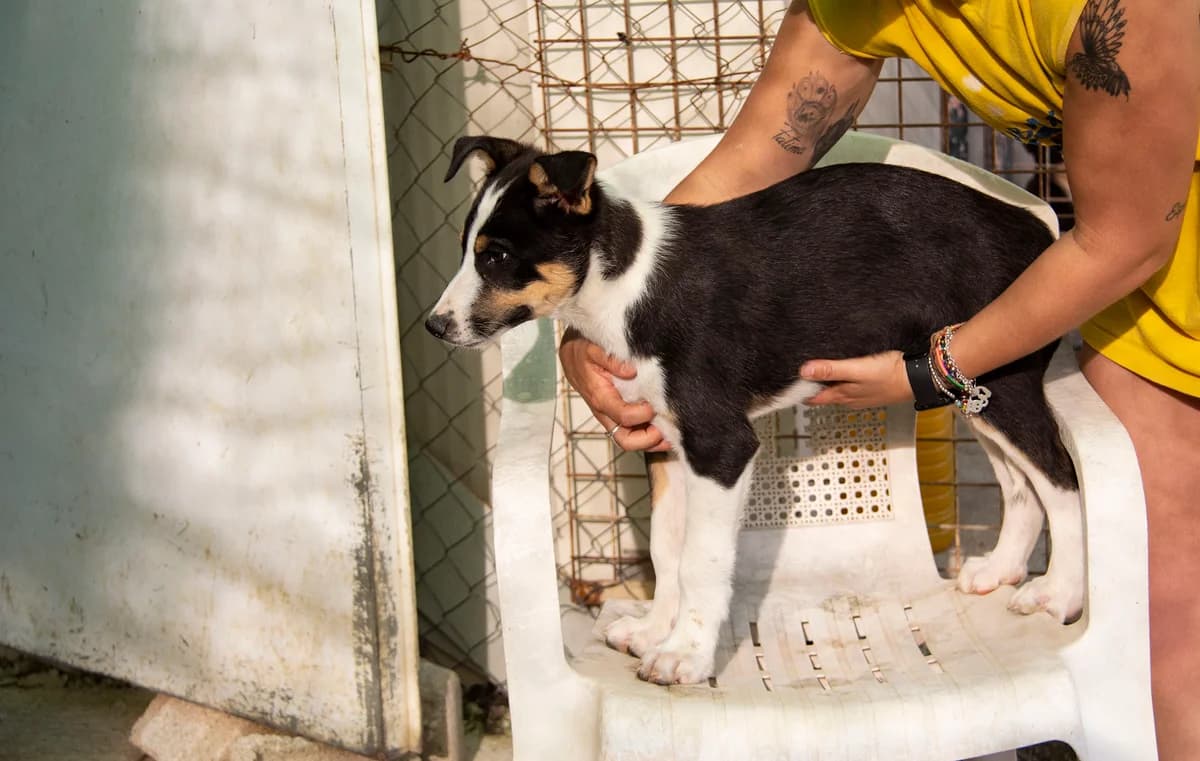
Kastration von Hunden
Mixed Breed · Male · Puppy · 12 months
Kastration von Hunden Now Become a Member! A Plea for Responsible Animal Healthcare Please share and enlighten others! In the past 12 months, we have treated three female dogs with a serious uterine infection: Husky-female dog Luna, Labrador-female dog Maze, and Labrador-female dog Coco. All three would have died without spaying. In their case, the illness was a random finding during the operation. Additionally, we have tragically lost two more cases: dog Franzi and cat Shady, both with mammary tumors. These developments are alarming, especially given that some veterinarians advise against spaying and instead recommend alternative methods like hormone implants or intravaginal sponges. The latter have been shown to increase the risk of mammary tumors. Legal hurdles and misinformation An example of this problem is the story of Labrador-female dog Coco. The veterinarian at the foster home was supposed to spay the Labrador-female dog Coco, but the veterinarian at our foster home told us that spaying is forbidden by the Animal Welfare Act and that she cannot spay Coco. A similar case occurred in the district of Erding: a dog owner contacted us desperately because his veterinarian refused to spay his dog. With an excerpt from the Animal Welfare Act, he was eventually able to obtain an appointment with our veterinarian. What does the Animal Welfare Act really say? According to § 6 of the Animal Welfare Act, the amputation of body parts or the removal of organs is generally prohibited. However, there are exceptions: "To prevent uncontrolled breeding or, where veterinary concerns do not stand in the way, to further the use or husbandry of the animal, castration to render the animal infertile can be performed." This regulation makes sense to prevent unnecessary operations like ear cropping or tail docking. But if animals are not neutered, serious health problems, uncontrolled breeding, and increasing animal suffering are at stake, as is often observed with feral farm cats. Scientific insights: Benefits of spaying According to a study by the Hofheim Animal Clinic, mammary tumors are one of the most common tumor types in female dogs, with 40-60% being malignant. The timing of spaying plays a crucial role: if spaying is performed before the first heat, the risk of mammary tumors is almost completely eliminated. If it is performed between the first and second heat, the risk drops by 92%. A 2010 study by the University of Zurich adds to these insights: spayed female dogs do not develop ovarian diseases like cysts or tumors. One in four unspayed female dogs develops a pyometra (uterine infection) before the age of 10. Up to 25% of unspayed female dogs develop mammary tumors, with 20-50% being malignant. Progestin treatments (e.g., intravaginal sponges) increase the risk of mammary tumors. Economic interests vs. animal health Hormone implants for male dogs and sponges for female dogs are profitable because they need to be replaced regularly. A one-time spaying, on the other hand, is a long-term intervention and brings less recurring income for veterinarians and pharmaceutical companies. But the well-being of the animals should come first. Spaying campaigns on farms – Your support is needed! Please support us In February, we will resume our spaying campaigns on farms. Currently, we are caring for three farms, where the capture of the animals is planned for February 4th and 9th. These actions are urgently needed because cats become sexually mature as early as 5-6 months and can have up to three litters per year. Without spaying, an uncontrolled population and great animal suffering are at stake. Your donation can help! Many of these animals suffer from injuries, territorial fights, and diseases. Please support us with a donation so that we can continue to help. Spaying is an important part of pet health care. It reduces the risk of serious illnesses, prevents uncontrolled breeding, and contributes to a better quality of life. Do not be misled by misinformation – act in the interest of your animal!
DE·Show original
Kastration von Hunden Jetzt Mitglied werden Ein Plädoyer für verantwortungsbewusste Tiermedizin Bitte teilen und andere aufklären ! In den vergangenen 12 Monaten haben wir drei Hündinnen mit einer schweren Gebärmutterentzündung behandelt: Husky-Hündin Luna, Labrador-Hündin Maze und Labrador-Hündin Coco. Alle drei wären ohne Kastration verstorben. Bei ihnen war die Erkrankung ein Zufallsbefund während der Operation. Zudem haben wir zwei weitere Fälle tragisch verloren: Hund Franzi und Katze Shady, beide mit Mammatumoren. Diese Entwicklungen sind alarmierend, insbesondere da einige Tierärzte von einer Kastration abraten und stattdessen alternative Methoden wie Hormonchips oder intravaginale Spiralen empfehlen. Letztere erhöhen nachweislich das Risiko für Mammatumore. Rechtliche Hürden und Fehlinformationen Ein Beispiel für diese Problematik ist die Geschichte von Labrador-Hündin Coco. Die Tierärztin der Pflegestelle sollte die Labrador Hündin Coco kastrieren, jedoch erzählte die Tierärztin unserer Pflegestelle, dass eine Kastration lt. dem Tierschutzgesetz verboten sei und sie Coco nicht kastrieren könne. Ein ähnlicher Fall ereignete sich im Kreis Erding: Ein Hundebesitzer kontaktierte uns verzweifelt, weil sein Tierarzt sich weigerte, seinen Hund zu kastrieren. Mit einem Auszug aus dem Tierschutzgesetz konnte er dann doch noch einen Termin bei unserer Tierärztin erhalten. Was sagt das Tierschutzgesetz wirklich? Laut § 6 Tierschutzgesetz ist das Amputieren von Körperteilen oder die Entfernung von Organen grundsätzlich verboten. Doch es gibt Ausnahmen: „Zur Verhinderung unkontrollierter Fortpflanzung oder – soweit tierärztliche Bedenken nicht entgegenstehen – zur weiteren Nutzung oder Haltung des Tieres, kann eine Unfruchtbarmachung vorgenommen werden.“ Diese Regelung macht Sinn, um unnötige Operationen wie das Kupieren von Ohren oder Ruten zu verhindern. Doch wenn Tiere nicht kastriert werden, drohen schwerwiegende gesundheitliche Probleme, unkontrollierte Vermehrung und zunehmendes Tierleid, wie es bei verwilderten Bauernhofkatzen oft zu beobachten ist. Wissenschaftliche Erkenntnisse: Vorteile der Kastration Laut einer Studie der Tierklinik Hofheim sind Mammatumore eine der häufigsten Tumorarten bei Hündinnen, wobei 40-60% der Tumoren bösartig sind. Der Zeitpunkt der Kastration spielt eine entscheidende Rolle: Erfolgt die Kastration vor der ersten Läufigkeit, wird das Risiko für Mammatumore fast komplett eliminiert. Erfolgt sie zwischen der ersten und zweiten Läufigkeit, sinkt das Risiko um 92%. Eine Studie der Universität Zürich aus dem Jahr 2010 ergänzt diese Erkenntnisse: Kastrierte Hündinnen entwickeln keine Ovarerkrankungen wie Zysten oder Tumoren. Jede vierte unkastrierte Hündin erkrankt vor dem 10. Lebensjahr an einer Pyometra (Gebärmutterentzündung). Bis zu 25% der unkastrierten Hündinnen entwickeln Mammatumore, von denen 20-50% bösartig sind. Progestinbehandlungen (z. B. intravaginale Spiralen) erhöhen das Risiko für Mammatumore. Wirtschaftliche Interessen vs. Tiergesundheit Hormonchips für Rüden und Spiralen für Hündinnen sind profitabel, da sie regelmäßig erneuert werden müssen. Eine einmalige Kastration hingegen ist ein langfristiger Eingriff und bringt weniger wiederkehrende Einnahmen für Tierärzte und Pharmaunternehmen. Doch das Wohl der Tiere sollte an erster Stelle stehen. Kastrationsaktionen auf Bauernhöfen – Ihre Unterstützung ist gefragt! Bitte unterstützt uns Im Februar starten wir wieder unsere Kastrationsaktionen auf Bauernhöfen. Aktuell betreuen wir drei Höfe, wo am 04.02. und 09.02. das Einfangen der Tiere geplant ist. Diese Aktionen sind dringend notwendig, da Katzen bereits mit 5-6 Monaten geschlechtsreif werden und bis zu drei Würfe pro Jahr bekommen können. Ohne Kastration droht eine unkontrollierte Population und großes Tierleid. Ihre Spende kann helfen! Viele dieser Tiere leiden unter Verletzungen, Revierkämpfen und Krankheiten. Bitte unterstützen Sie uns mit einer Spende, damit wir weiterhin helfen können. Die Kastration ist ein wichtiger Bestandteil der Gesundheitsvorsorge bei Haustieren. Sie reduziert das Risiko schwerer Erkrankungen, verhindert unkontrollierte Vermehrung und trägt zu einer besseren Lebensqualität bei. Lassen Sie sich nicht durch Fehlinformationen verunsichern – handeln Sie im Interesse Ihres Tieres!
- ✓Neutered
- ✓Microchipped
Listed 4 months ago