Adopt Milky
Mixed Breed · Male · Baby
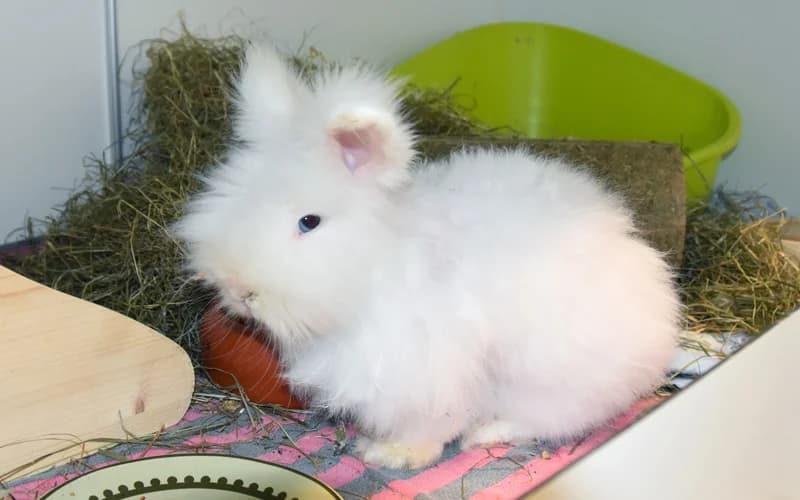
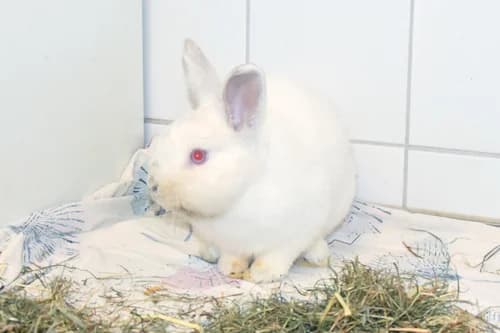
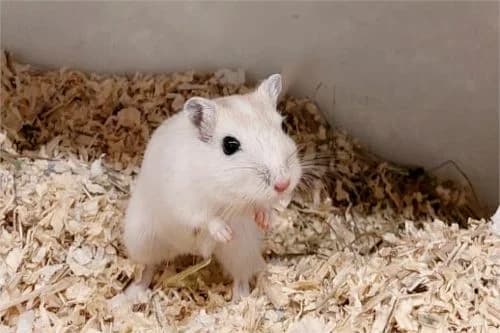
Breed: Dwarf Rabbit Gender: male, neutered on January 20, 2026. Milky may safely mate with females starting March 3, 2026. Date of birth: around May 2025 Appearance: Milky's fur is snow white. His slightly larger ears shimmer pink. He has raspberry-colored eyes. Why at the animal shelter: Milky was impulsively acquired, and his previous owners were overwhelmed with rabbit care. Health: No notable issues. Personality: Milky is brimming with energy! He has bumblebees in his plush rear and needs action. Milky can't sit still and is a real power rocket. Photographing him in his enclosure was impossible – as soon as the door is even slightly open, the sweet one in spirit "Yippieh" calls out, and he's off the moment you're not paying attention. First he lets off some energy and races around, then he checks everything out and sniffs everything, and in the end, he lies down comfortably and processes the impressions. He simply lets himself be pampered! That Milky needs a lot of space and a lot of free roam in his new home goes without saying. We also think that a more laid-back doe would be a better match for him than a rather dominant lady. If everything fits, all involved will have a lot of joy with our good mood rabbit Milky! General husbandry information: Rabbits are social animals and must therefore be kept in pairs or groups. We discourage single housing. Our neutered male rabbits are looking for a female rabbit, and our female rabbits are looking for a neutered male rabbit as a partner. Generally, rabbits of similar age often fit each other best: young rabbits usually have much more temperament and energy, while older ones need more rest. Rabbits do not like to spend their time in cages. They want to hop around as much as possible in the house. It is best if they have a large floor enclosure or their own room. As a retreat option, they need a wooden house or cardboard boxes. The most important food for rabbits is hay, hay, and more hay. Only by grinding hay can they wear down their teeth as nature intended. In addition, a daily ration of fresh food (vegetables, but no or very little fruit) is important. Fresh water should always be available. Dry food should be offered sparingly or as a treat. Nibbles, crackers, and the like are marketing gimmicks by food manufacturers and are more harmful to the rabbit. For inquiries and advice:
Read original (de)
Rasse: Zwergkaninchen Geschlecht: männlich, kastriert am 20. Januar 2026. Milky darf ab 3. März gefahrlos zu Weibchen ziehen. Geburtsdatum: ca. Mai 2025 Aussehen: Milkys Fell ist schneeweiß. Seine etwas größeren Ohren schimmern rosa. Er hat Himbeeräuglein. Weshalb im Tierheim: Milky war unbedacht angeschafft worden, und seine ehemaligen Menschen waren mit der Kaninchenhaltung überfordert. Gesundheit: Keine Auffälligkeiten. Charakter: Milky platzt fast vor Energie! Er hat Hummeln im Plüschhintern und braucht Action. Milky kann nicht stillsitzen und ist eine echte Powerrakete. Ihn in seinem Gehege zu fotografieren, war unmöglich – kaum ist die Tür einen Spalt offen, hört man den Süßen im Geiste „Yippieh“ rufen, und weg ist er, sobald man einen Moment nicht aufpasst. Erst einmal tobt er sich aus und rast durch die Gegend, später schaut er sich dann alles genau an und schnuppert alles ab, und am Ende legt er sich gemütlich hin und verarbeitet die Eindrücke. Er lässt es sich einfach gutgehen! Dass Milky im neuen Zuhause viel Platz und jeden Tag sehr viel Freilauf braucht, versteht sich von selbst. Wir denken auch, dass eine eher ruhige Häsin als Partnerin besser für ihn wäre als eine recht dominante Dame. Wenn alles passt, werden alle Beteiligten sehr viel Freude an unserem Gute-Laune-Kaninchen Milky haben! Allgemeines zur Haltung: Kaninchen sind Rudeltiere und müssen daher mindestens zu zweit gehalten werden. Einzelhaltung lehnen wir ab. Unsere kastrierten Kaninchenjungs suchen ein Kaninchenmädchen, unsere Kaninchenmädchen einen kastrierten Kaninchenjungen als Partner. Meistens passen etwa gleichaltrige Kaninchen am besten zueinander: Junge Kaninchen haben in der Regel viel mehr Temperament und Energie, ältere brauchen mehr Ruhe. Kaninchen verbringen ihre Zeit nicht gerne in einem Käfig. Sie möchten so viel wie möglich frei in der Wohnung herumhoppeln. Am besten ist es, wenn ihnen ein großes Bodengehege oder ein eigenes Zimmer zur Verfügung steht. Als Rückzugsmöglichkeit brauchen sie ein Holzhäuschen oder Pappkartons. Das wichtigste Nahrungsmittel für Kaninchen ist Heu, Heu und nochmals Heu. Nur durch das Zermahlen von Heu können sie ihre Zähne so abnutzen, wie das von der Natur vorgesehen ist. Darüber hinaus ist eine tägliche Ration Frischfutter (Gemüse, aber kein oder sehr wenig Obst) wichtig. Frisches Wasser sollte sowieso stets zur Verfügung stehen. Trockenfutter sollte man, wenn überhaupt, nur sparsam oder als Leckerli anbieten. Nagerdrops, Kräcker und ähnliches sind ein Marketinggag der Futterhersteller und eher schädlich fürs Kaninchen. Auskünfte und Beratung: , abends ab 18 Uhr
- ✓Neutered
- ✕Good with dogs
Free account — 10 contacts included
Listed 1 month ago