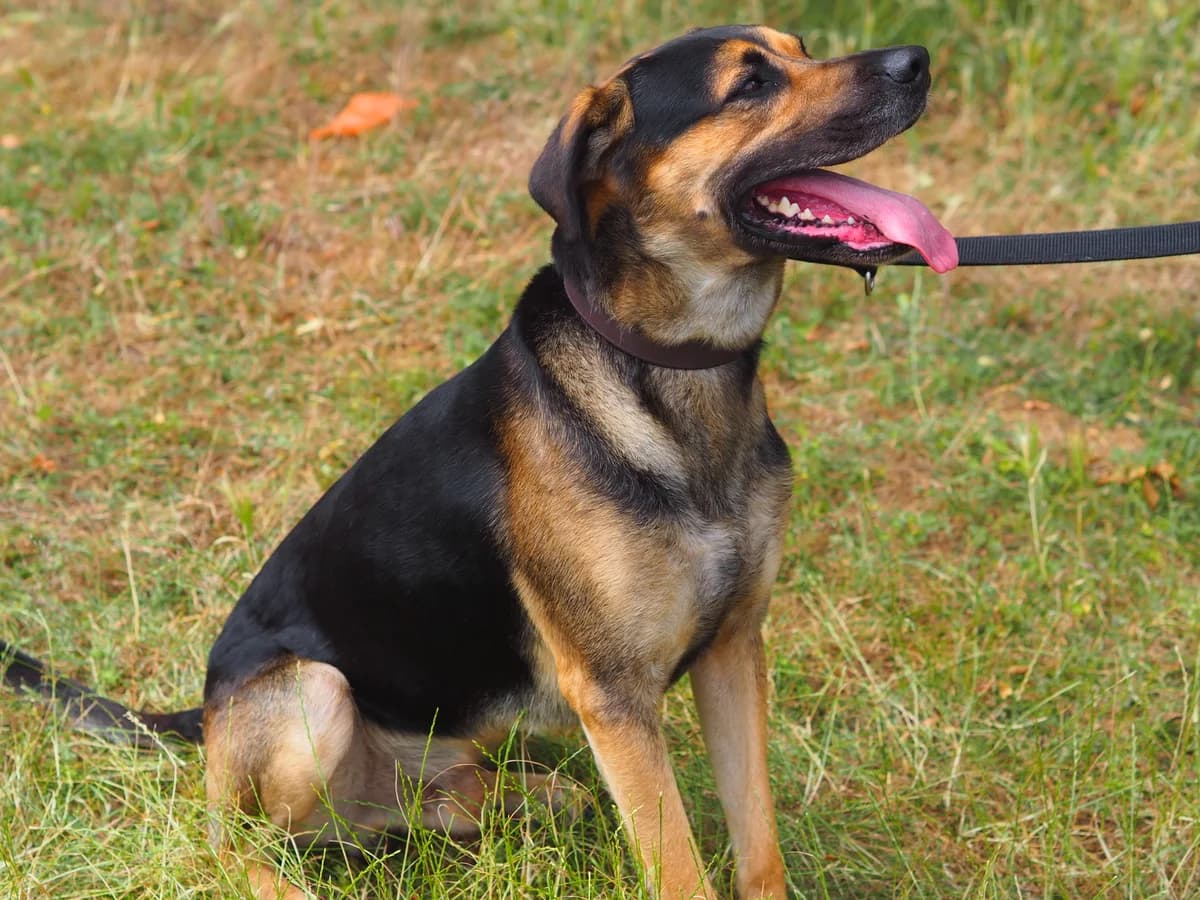
Kharma
Doberman · Female · Puppy
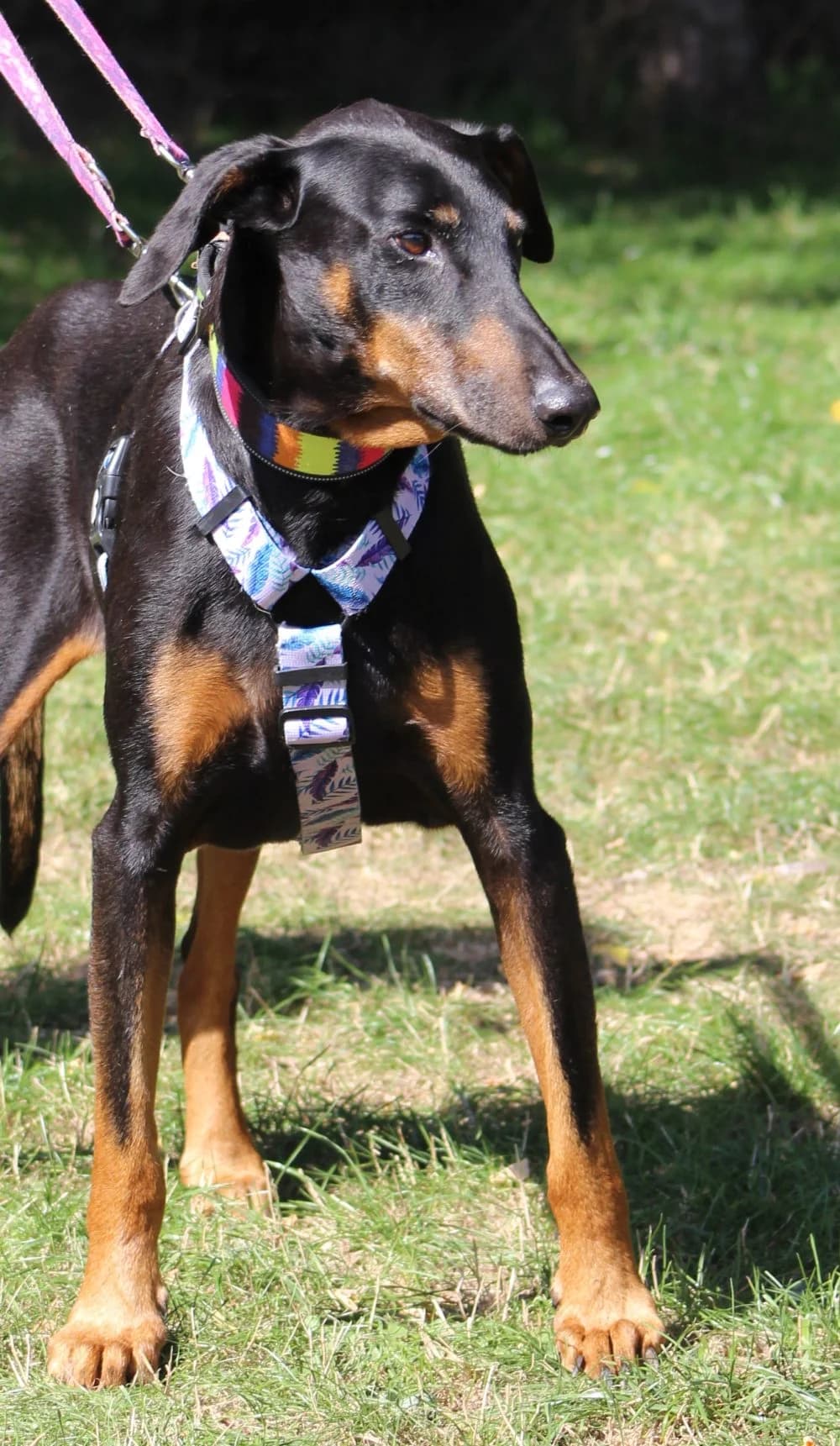
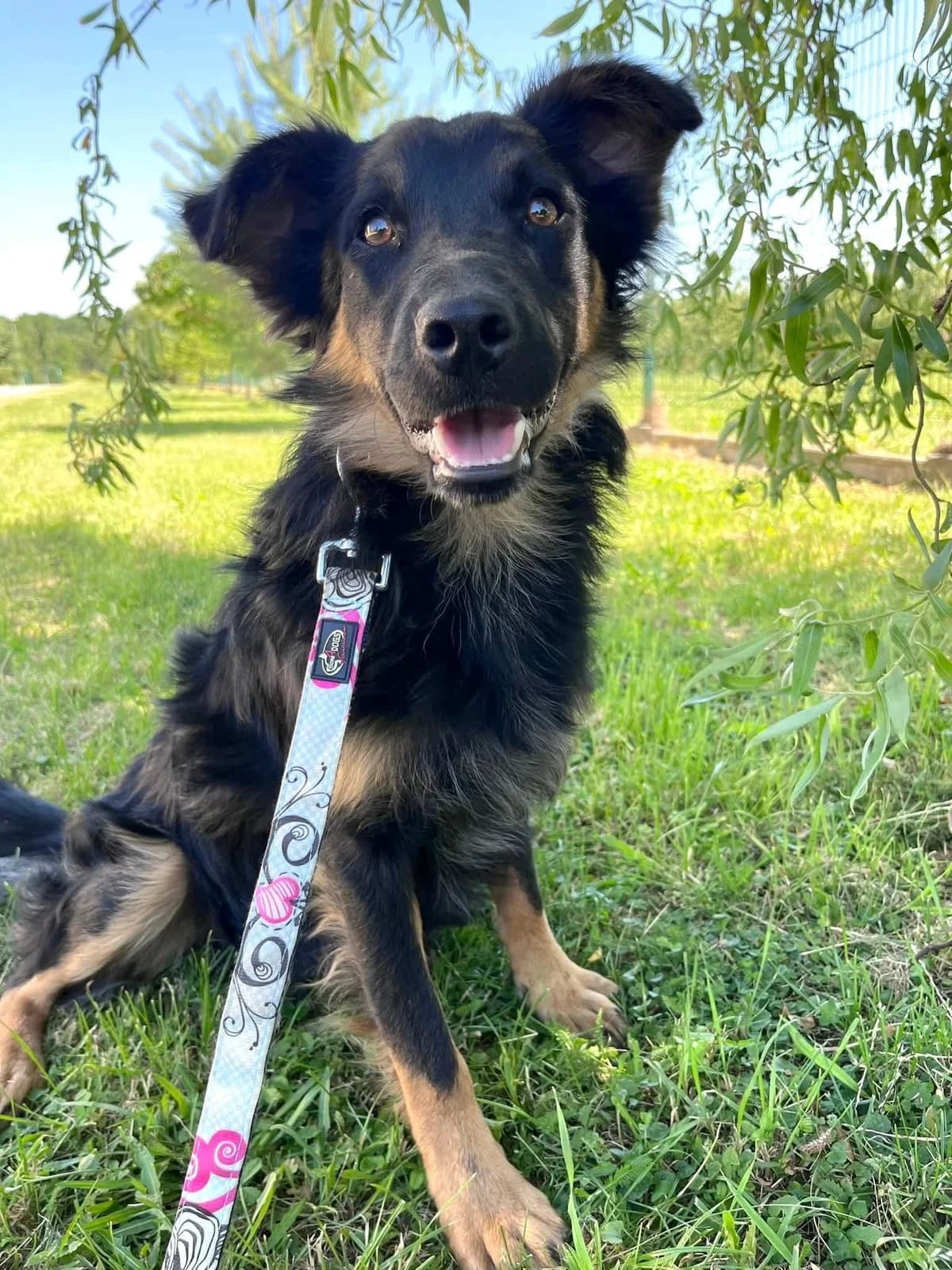
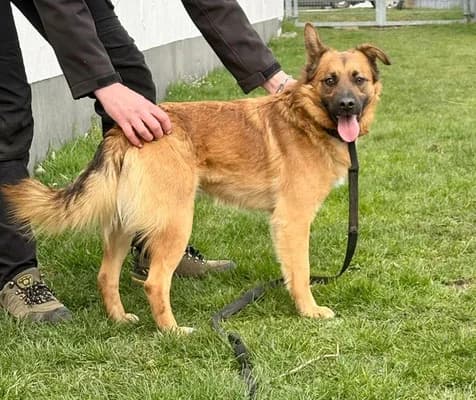
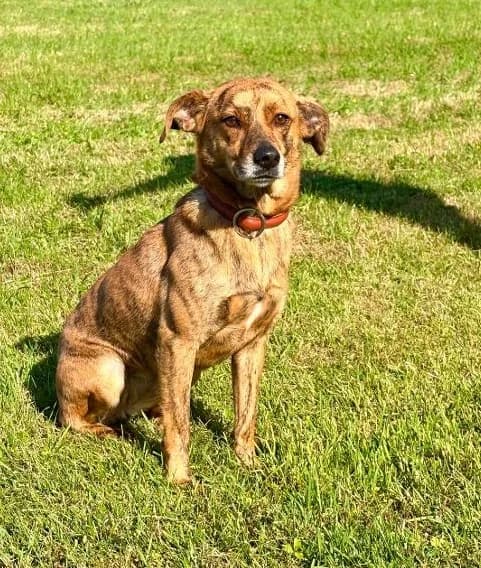
Description Our animal welfare workers report: Kharma had a rough start in life. At around 9 months old, she was thrown over the fence of our animal shelter like discarded furniture. Signs of neglect were clearly visible. Kharma was so emaciated that she resembled a Galgo more than a Dobermann. Despite her poor treatment in her previous life, she trusted us and opened her gentle, loving soul. Due to her poor physical condition, we brought her to the animal clinic for comprehensive examinations. A portosystemic shunt (definition below) was diagnosed. A CT scan was supposed to provide insight into the possibility of an operation, but it revealed further shunts, making an operation impossible. With special liver feed (dry and some wet food) and medications, she could be stabilized to lead a normal life and reach a ripe old age. This is her treatment plan: Every 12 hours 7 ml Duphalac (Lactulose), every 24 hours Hepatosil for large breeds, and every 24 hours 300 mg Urbasoline. In the video, you can see how friendly and easy it is for Kharma to take her medicine. At the animal shelter, Kharma is people-oriented and compatible with her fellow animals, regardless of gender. She is playful, balanced, gentle, and attentive – a dog who exudes peace and trust. Every day, we see her getting stronger, stabilizing, and beginning to enjoy life again. We wish for Kharma people who will give her security, safety, and warmth and accept her as a family member. Who opens their heart to this wonderful Dobi-soul? Explanation: A portosystemic shunt (PSS) is an abnormal blood vessel that allows blood to bypass the liver, causing toxic substances and nutrients from the intestines to enter the general circulation directly. This can be an inherited (present at birth) or acquired (developed later, often due to liver disease) condition. Update 23.04.2026: Text addition and new photos: Every day, we see that she is getting stronger and more balanced. We notice that she can lead a normal and long life if she receives her treatment correctly. At the animal shelter, she is now doing better, happy, and balanced, playing a lot with her fellow animals. 14.03.2026 New video 18.02.2026: Photos from the November visit Please note:
DE·Show original
Beschreibung Unsere Tierschützer berichten: Kharma hatte keinen guten Start ins Leben. Im Alter von etwa 9 Monaten wurde sie über den Zaun unseres Tierheims geworfen, wie ein abgelegtes Möbelstück. Spuren der Vernachlässigung waren deutlich erkennbar. Kharma war so stark abgemagert, dass sie eher einer Galga ähnelte als einer Dobermannhündin. Trotz schlechter Behandlung in ihrem bisherigen Leben vertraute sie uns und öffnete ihre sanfte, liebenswerte Seele. Aufgrund ihrer schlechten körperlichen Verfassung brachten wir sie in die Tierklinik und ließen dort umfangreiche Untersuchungen durchführen. Es wurde ein portosystemischer Shunt (Definition siehe unten) diagnostiziert. Eine Computertomographie sollte Aufschluss über die Möglichkeit einer Operation bringen, zeigte jedoch weitere Shunts, wodurch eine OP ausgeschlossen werden musste. Mit Spezialfutter für die Leber (Trocken- und etwas Nassfutter) und Medikamenten konnte sie so stabilisiert werden, dass sie ein ganz normales Leben führen und auch ein hohes Alter erreichen kann. So sieht ihr Behandlungsplan aus: Alle 12 Stunden 7 ml Duphalac (Lactulose), alle 24 Stunden Hepatosil für große Rassen und alle 24 Stunden 300 mg Urbasoline. In dem Video wird gezeigt, wie freundlich und problemlos Kharma sich die Medizin verabreichen lässt.Im Tierheim zeigt sich Kharma menschenbezogen und verträglich mit ihren Artgenossen, unabhängig vom Geschlecht. Sie ist verspielt, ausgeglichen, sanft und aufmerksam – ein Hund, der Ruhe und Vertrauen ausstrahlt. Jeden Tag sehen wir, wie sie stärker wird, sich stabilisiert und wieder anfängt, das Leben zu genießen. Wir wünschen uns für Kharma Menschen, die ihr Sicherheit, Geborgenheit und Wärme schenken und sie als Familienmitglied aufnehmen und ankommen lassen. Wer öffnet sein Herz für diese wundervolle Dobi-Seele? Vor Ausreise wird sie kastriert.Erklärung: Ein portosystemischer Shunt (PSS) ist ein abnormales Blutgefäß, das es dem Blut ermöglicht, die Leber zu umgehen, sodass Giftstoffe und Nährstoffe aus dem Darm direkt in den allgemeinen Kreislauf gelangen. Dies kann eine angeborene (bei der Geburt vorhandene) oder erworbene (später entwickelte, oft aufgrund einer Lebererkrankung) Erkrankung sein. Update23.04.2026: Textergänzung und neue Fotos: Jeden Tag sehen wir, dass sie stärker und ausgeglichener wird. Wir stellen fest, dass sie, wenn sie ihre Behandlung korrekt erhält, ein normales und langes Leben führen haben kann. Im Tierheim geht es ihr jetzt besser, sie ist glücklich und ausgeglichen und spielt viel mit ihren Artgenossen.14.03.2026 neues Video18.02.2026: Fotos vom Besuch im November Bitte beachten Sie: Die Rückmeldungen der Tierheime spiegeln das aktuelle Verhalten der hier zur
- ✓Spayed
Listed 4 months ago