5 conseils simples pour la santé de votre chat
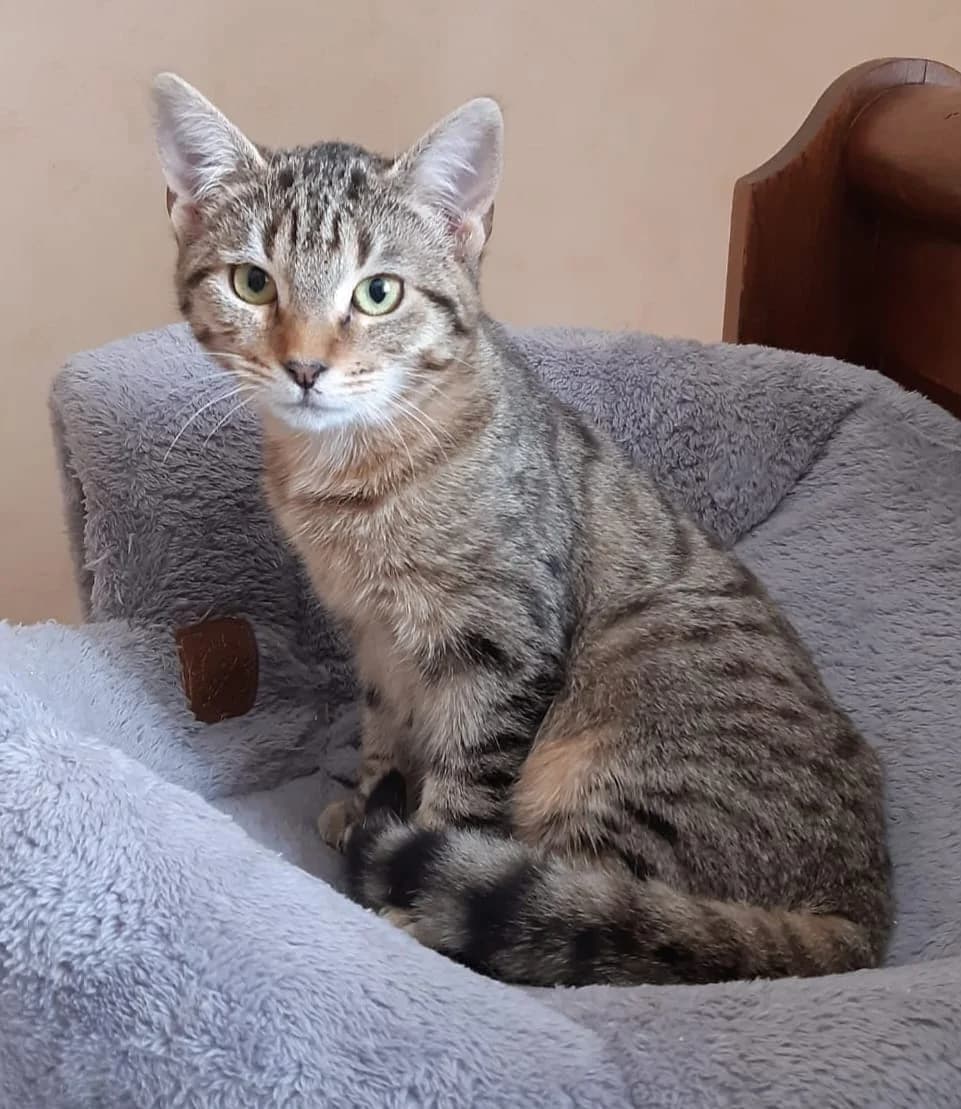
Mixed Breed · Unknown · Kitten · 4 months
5 simple tips for your cat's health Posted on March 13, 2024 by Brigit Here are the 5 essential points to remember and take into account for your cat's well-being and good health. At the time of adoption and throughout its life as a cat. To keep your cat healthy as long as possible (all our cats and kittens available for adoption are in good health, unless otherwise stated on their profile before adoption), to keep a happy and fit cat as long as possible, here are 5 essential key points. Following our recommendations will allow you to have a happy and fit cat, which will also prevent you from more serious problems when it gets older. Vaccinations Deworming for cats Spaying/neutering of cats Identification of cats and anti-parasitic treatments 1/ Vaccinations - why and which ones? Vaccination is done from 7-8 weeks for the kitten who should not go out (except in closed places and/or not frequented by unvaccinated cats) before receiving his first vaccinations and their booster. Kittens are usually vaccinated against feline panleukopenia and rhinotracheitis (basic vaccinations strongly recommended). Vaccination is done in two stages, the first injection at 7/8 weeks then a second injection 15 days or a month later. They can also be vaccinated against feline leukemia (for cats that go outside and have potential contact with other cats). It can be done from 10-11 weeks. France is rabies-free but you will need to vaccinate your cat if you want to take your cat with you on an international trip. One injection after 3 months. These vaccinations and regular health checks will help protect your cat and ensure continuous protection against diseases and thus keep it healthy 👍😺 More information on cat vaccination 2/ Why give deworming treatment to my kitten or cat? Deworming is a treatment against internal parasites common in kittens and not exceptional in adult cats. It is recommended to do it once a month for kittens up to 6 months and once or twice a year for adult cats depending on their lifestyle. Prefer a broad-spectrum dewormer (effective against all types of worms, including roundworms and tapeworms). Do not hesitate to discuss it with your veterinarian 😉 I do it at each annual visit to the vet ... that way it's done! (comment from the webmaster/adopter/volunteer for the association 💞😽) 3/ Spaying/neutering of cats (male and female cats): Spaying/neutering of cats, male and female, is strongly recommended. And essential if you want to adopt with our association. It can be performed from the youngest age (from 3 months), and especially before the first heat, for mainly medical reasons. And for more comfort for you too if we have to stay only in the "human" register. Everyone who has experienced the heat period of a female cat knows what we are talking about I think 😉 Spaying/neutering prevents unwanted meowing during the heat period, the attraction of neighboring males, and especially unwanted pregnancies and therefore litters of kittens, to place or sadly sometimes to remove or cruelly abandon, and that we prefer to avoid completely. It also helps prevent mammary tumors in female cats, it eliminates the risk of uterine infection, fibroids or ovarian cysts. Neutering male cats helps limit their outings and the resulting inconveniences, particularly fights and bites, it combats urinary marking that often occurs after puberty and eliminates the strong smell of urine specific to unneutered males. Our association obviously requires spaying/neutering of the cats we adopt, our daily battle being to save and place cats and kittens abandoned by unscrupulous owners who do not care about the well-being of animals! Scientific publications have shown that spaying/neutering cats significantly increases their lifespan. Any other ideology is anthropomorphism and not animal welfare. The disadvantages are minor. The tendency to gain weight can be successfully combated with a balanced diet. 4/ Identification of cats (tattoo or microchip) Identification of your cat or kitten is mandatory according to French law. And indispensable according to us for their safety. It is a simple and effective way to limit risks in case of loss or theft. Especially that your animal is euthanized if found stray and unidentifiable. And believe us, they will not ask questions at the pound if your animal is not identified as belonging to someone. The dermal tattoo is generally performed during sterilization. The placement of an electronic chip is a possible alternative, increasingly common, done as a simple injection on your cat while it is not sedated if you have not done it yet ... Don't forget to report any change of address, phone number or nickname of the cat to the National Feline File: National Feline File 112-114, Avenue Gabriel Péri - 94246 L'
FR·Show original
5 conseils simples pour la santé de votre chat Publié le 13 mars 202413 mars 2024 par Brigit Voici les 5 points essentiels à retenir et à prendre en compte pour le bien être et la bonne santé de votre chat. Lors de son adoption comme tout au long de sa vie de chat. Pour garder votre chat en bonne santé le plus longtemps possible (tous nos chats et chatons proposés à l’adoption sont en bonne santé pour rappel, sauf info contraire mentionnée sur son profil avant son adoption), pour garder un chat heureux et en pleine forme le plus longtemps possible donc, voici 5 points clés essentiels. Suivre nos recommandations vous permettra d’avoir un chat heureux et en pleine forme ce qui vous évitera aussi d’autres soucis plus sérieux lorsqu’il vieillira. Les vaccins Vermifuges pour le chat La stérilisation du chat Identification du chat les antiparasitaires 1/ Les vaccins – pourquoi et lesquels ? La vaccination se pratique à partir de 7-8 semaines pour le chaton qui ne doit pas sortir (sauf dans des endroits clos et/ou non fréquentés par des chats non vaccinés) avant d’avoir reçu ses premiers vaccins et leur rappel. Les chatons sont habituellement vaccinés contre le typhus et le coryza (vaccinations de base extrêmement recommandées). Vaccination qui se pratique en deux temps, première injection donc à partir de 7/8 semaines puis une deuxième injection 15 jours ou un mois après. Ils peuvent aussi être vaccinés contre la Leucose féline (pour les chats qui sortent en extérieur et en contact potentiel avec d’autres chats). Elle peut être faite à partir de 10-11 semaines. La France est exemptée de rage mais vous devrez le vacciner si vous voulez emmener votre chat avec vous en voyage à l’étranger. Une seule injection faite après 3 mois. Ces vaccinations et un contrôle régulier de sa santé. vous permettront de préserver votre chat et d’assurer sa protection continue contre les maladies et ainsi le garder en bonne santé 👍😺 Plus d’infos sur la vaccination du chat 2/ Pourquoi donner du vermifuge à mon chaton ou à mon chat ? La vermifugation est un traitement contre les vers et parasites internes fréquents chez le chaton et non exceptionnels chez le chat adulte. Il est recommandé de le faire 1 fois par mois pour les chatons jusqu’à 6 mois et une ou deux fois par an pour le chat adulte selon son mode de vie. Privilégier un vermifuge polyvalent (actif sur tous les types de vers notamment les trichures et vers de type « ténia »). Ne pas hésiter à en parler avec votre vétérinaire 😉 Moi je le fais à chaque visite annuelle chez le vétérinaire … comme ça c’est fait ! (commentaire de la webmaster/adoptante/bénévolepour l’asso 💞😽) 3/ La Stérilisation du chat (chat mâle et chat femelle) : La stérilisation des chats, mâles comme femelles est très fortement conseillée. Et indispensable si vous voulez adopter avec notre association. Elle peut être effectuée dès le plus jeune âge (à partir de 3 mois), et surtout avant les premières chaleurs, pour des raisons médicales essentiellement. Et pour plus de confort pour vous aussi si on doit rester uniquement dans le registre « Z’humain ». Tous ceux qui auront vécu l’épisode de chaleurs d’une chatte sauront de quoi nous parlons je crois 😉 La stérilisation évite les miaulements intempestifs pendant la période des chaleurs, l’attirance des mâles du voisinage, et surtout les gestations non désirées et donc les portées de chatons, à placer ou hélas parfois à supprimer ou abandonner cruellement et ça on préfère carrément éviter. Elle permet aussi d’éviter les tumeurs mammaires pour les chats Femelles, elle supprime les risques d’infection utérine, de fibromes ou de kystes ovariens. La castration des chats mâles contribue à limiter leurs sorties et les inconvénients qui en résultent, notamment les bagarres et morsures, elle combat le marquage urinaire qui survient souvent après la puberté et supprime l’odeur forte des urines spécifiques des mâles non castrés. Notre association impose évidement la stérilisation des chats que nous faisons adopter, notre combat étant quotidien pour sauver et placer des chats et chatons lâchement abandonnés par des maîtres sans scrupules et qui ne se préoccupent pas du bien être des animaux ! Des publications scientifiques ont montré que la stérilisation des chats augmente très nettement leur espérance de vie. Et toute autre idéologie relève de l’anthropomorphisme et pas du bien être animal. Les inconvénients sont mineurs. La tendance à l’embonpoint peut être combattue avec succès par une alimentation équilibrée. 4/ L’Identification du chat (tatouage ou puce) L’identification de votre chat ou chaton est obligatoire selon la loi Française. Et indispensable selon nous pour leur sécurité. C’est un moyen simple et efficace de limiter les risques en cas de perte ou de vol. Notamment celui que votre animal soit euthanasié si il est retrouvé errant et sans identification. Et croyez nous, ils ne se poseront pas de questions à la Fourrière si votre animal n’est pas identifié comme appartenant à quelqu’un. Le tatouage dermique sera pratiqué généralement lors de la stérilisation. La pose d’un insert électronique est une alternative possible, de plus en plus courante, réalisée comme une simple injection sur votre chat non endormi si vous ne l’avez pas encore fait…. N’oubliez pas de signaler tout changement d’adresse, de téléphone ou nom d’usage du chat auprès du fichier national : Fichier National Félin 112-114, Ave Gabriel Péri – 94246 L’Hay les Roses Cédex Tél : 0 810 778 778 (0.05 cts / minute) Site web du Fichier National Félin pour tout changement à signaler (déménagement, nouveau numéro de téléphone, perte, décès du chat) Dans tous les cas un document vous sera envoyé après adoption pour enregistrement de votre animal à votre nom. Après validation de l’adoption par notre association (voir les modalités d’adoption). 5/ Les Traitements antiparasitaires : Un traitement contre les puces doit être effectué régulièrement pour les chats qui sortent à l’extérieur. Utilisez de préférence un produit prescrit par votre vétérinaire, il sera plus efficace et moins toxique que certaines présentations du commerce qui peuvent être ingérées par léchage. INFOS SUR NOS ADOPTIONS Nous rappelons que pour toutes nos adoptions une primo-vaccination Typhus/Coryza, la stérilisation et l’identification sont effectués et inclus dans la participation financière que nous demandons pour l’adoption de chacun de nos protégés. Partager : Imprimer(ouvre dans une nouvelle fenêtre) Imprimer Envoyer un lien par e-mail à un ami(ouvre dans une nouvelle fenêtre) E-mail J’aime ça :J’aime Chargement… Articles similaires
- ✓Vaccinated
- ✓Neutered
- ✓Microchipped
- ✓Good with cats
Listed 4 months ago