Mary
Female · Adult · 7 years
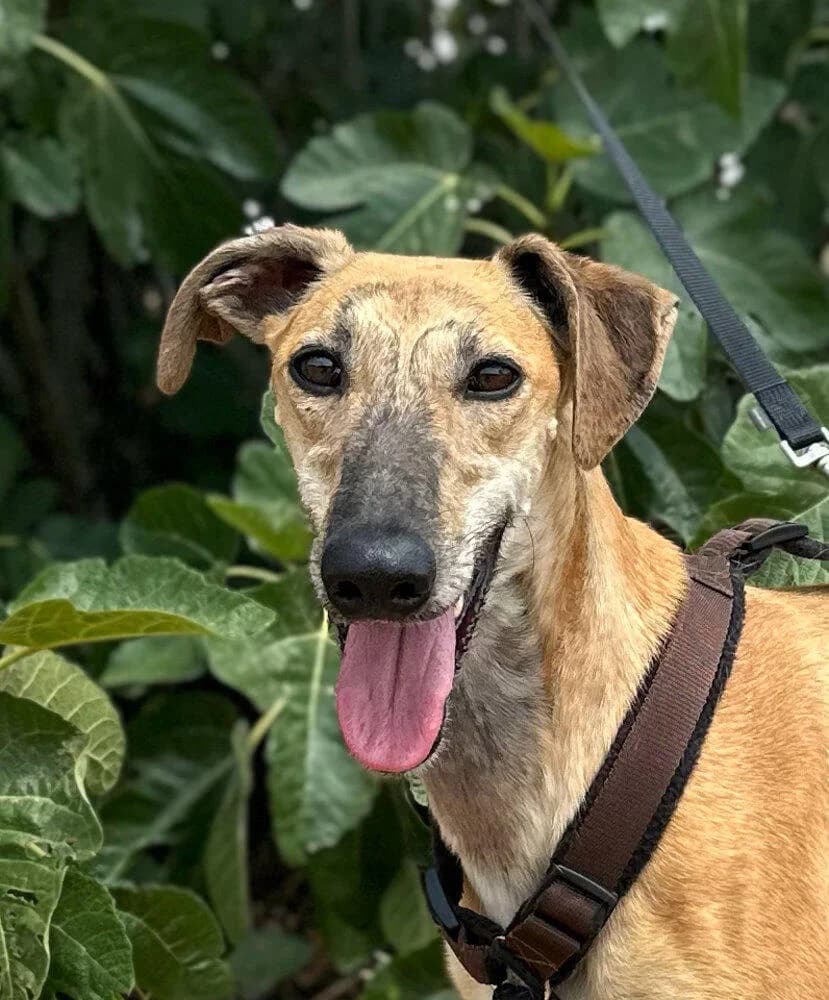
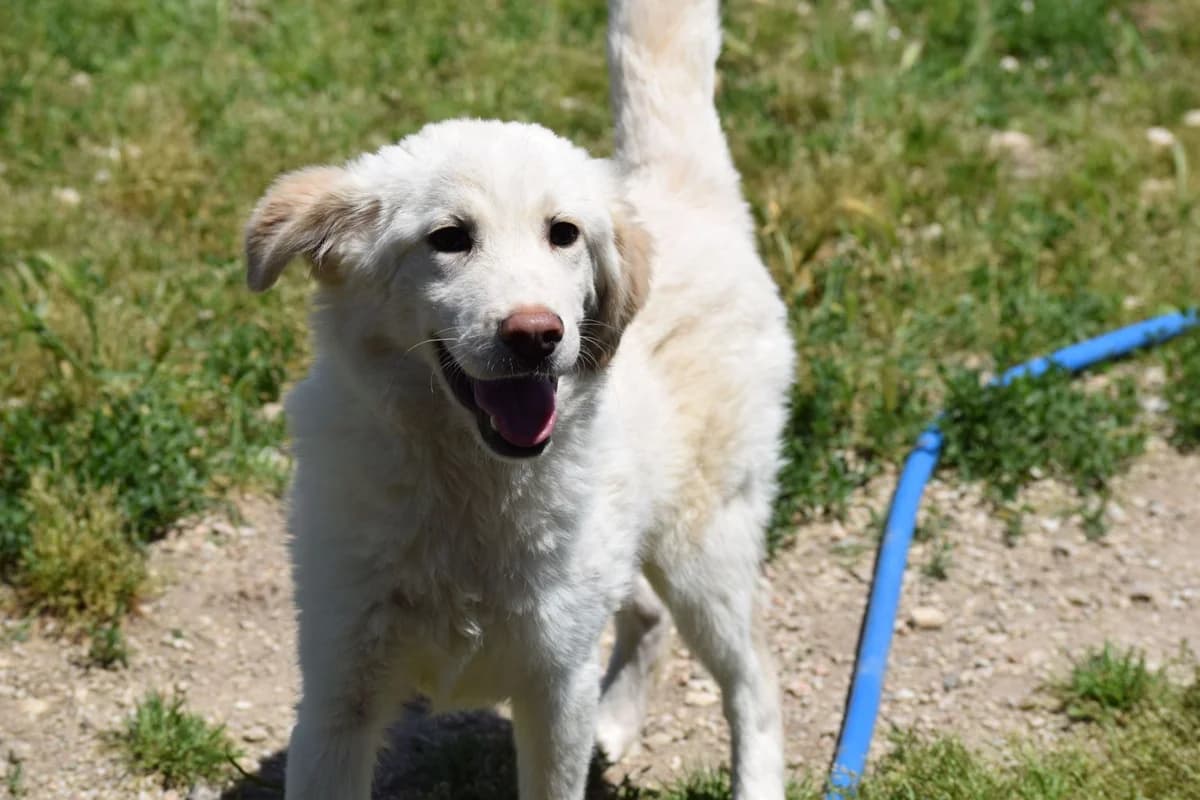
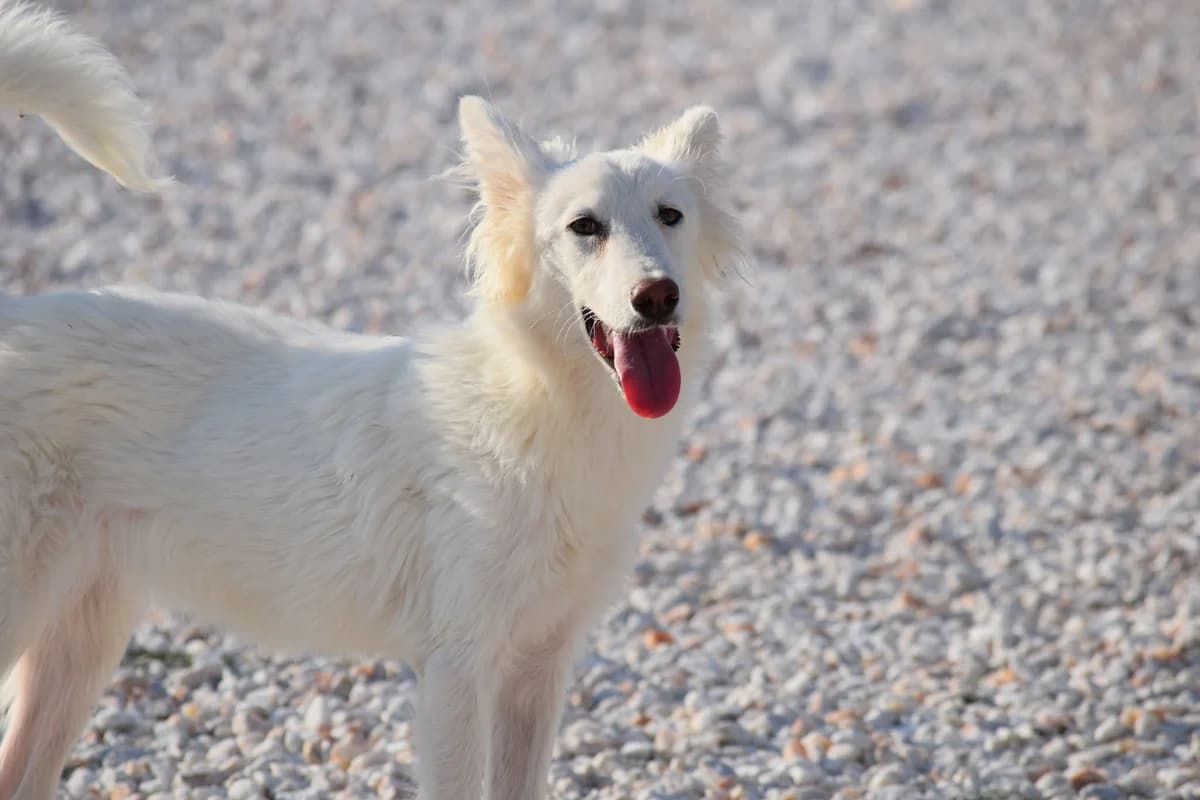
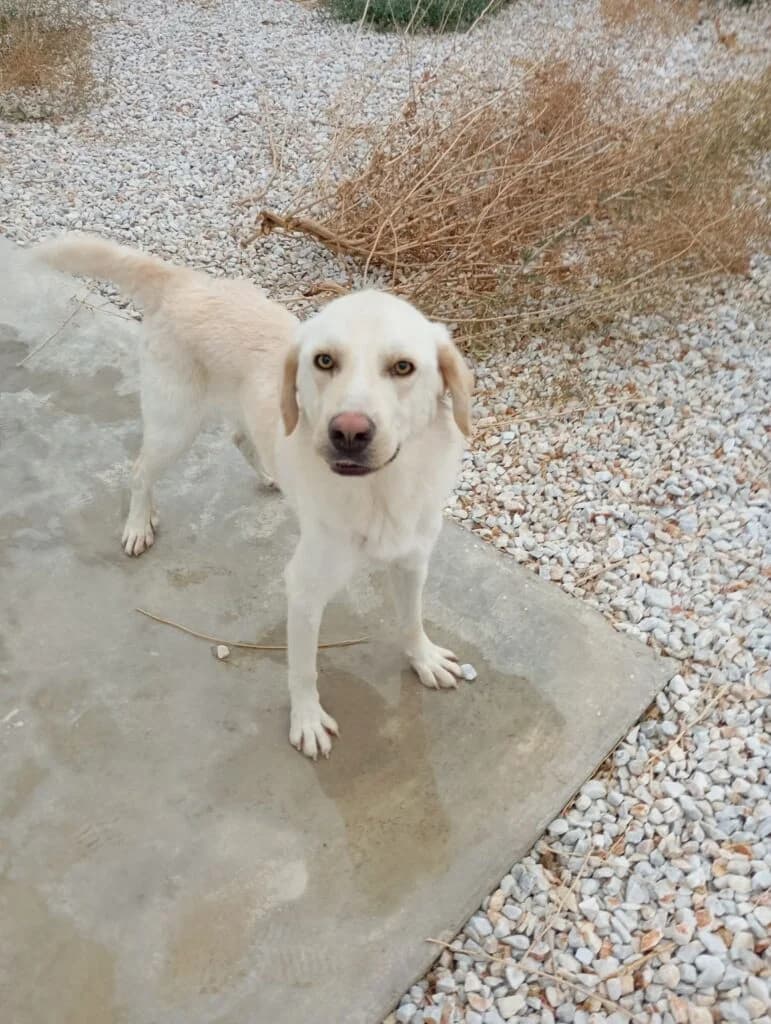
Mary and her seven siblings were born in Greece on the edge of an orchard. Their parents were - like many dogs in the region - strays. The puppies were mixed-breed Hellenikos Pimenikos, a Greek livestock guardian dog. The orchard owner took pity on the dogs and took them onto the safe property for the first weeks. In their first new home, there was already a dog, which unfortunately was extremely annoyed by the new puppy and constantly growled and snapped at her. Mary was rehomed and moved in with an older couple who meant well by her. Unfortunately, upbringing and consequences were somewhat neglected, and attending a dog school should bring change. Mary, however, was now a pubescent female puppy with the proud weight of ~ 30 kg, which was physically not manageable for the older people. It was decided to give up the puppy. Since the supervising association could not get an exact picture of Mary's characteristics, she moved to a dog boarding facility, where she was worked with. From here, all parties involved will make another attempt to find the most suitable family for Mary. At the boarding facility, the puppy is now well known, can be assessed and - most importantly - can give the new owners very accurate advice and then assess whether it can be a good match. Mary has genetic components of a livestock guardian dog. This umbrella term for many different breeds requires some special points in the nature of a dog. The guard dogs have the property of wanting to defend their herd (it does not always have to be animals, their human pack is also part of it) and the surrounding territory against enemies/strangers. They are usually independent thinking and acting dogs, who are willing to follow their people's commands and wishes with great trust. Livestock guardian dogs (abbreviated: HSH) are sensitive, independent and self-confident, large-framed dogs. They are suspicious and reserved and always vigilant with regard to their resources. HSH enjoy good social contact with their people, but they find it annoying to be constantly prescribed behaviors and harassed. Especially if the one who wants to decide over them, in their eyes has no entitlement to do so, because he proves to be uncontrolled, violent and unreliable, instead of being sovereign, leadership-competent, forward-looking and caring. A dog that questions leadership is not "dominant" yet. Due to the predisposition of the HSH, it is absolutely necessary to take into account its guard and protection needs: Watch, wander off its terrain, pay attention to its resources - that's its passion. Of course, it also pays attention to its people, its dog friends or its cats. It is absolutely nonsensical to work against this behavior (to delete it, so to speak) and would violate the nature of the HSH. Instead, you should work with this behavior and channel it into appropriate channels. Now you have learned a lot about the HSH, whereby it must be said, in view of Mary, of course, that we do not know how much these characteristics show in her, since she is a HSH mix. Mary is friendly to most of her fellow dogs and loves to play with dogs she trusts. Despite everything, you should let the dogs run with a leash with foreign dogs and let them run side by side with a distance. It is then easy to recognize whether both dogs like each other. We experienced a very typical situation in the car area: Mary and another dog were already in the interior of the bus when a third dog was to board. It was obvious that it overwhelmed Mary. She would probably have defended her territory. We solved the problem by putting a dog in the passenger footwell, the second dog remained in the rear part, so it was not harassed and restricted, and so everything led to a de-escalation. Even if you consider that Mary is not a purebred HSH, she still has many peculiarities that need to be recognized, tolerated or corrected and thus give her the feeling of a sovereign leadership. A HSH (as well as the mixes of these breeds) are not dogs for everyone. Mary is vaccinated, dewormed and chipped.
DE·Show original
Mary und ihre sieben Geschwister wurden in Griechenland am Rande einer Obstplantage geboren. Ihre Eltern waren – wie so viele Hunde in der Region – Streuner. Die Welpen waren Mischlinge der Rasse Hellenikos Pimenikos, einem griechischen Herdenschutzhund. Der Plantagenbesitzer hatte Mitleid mit den Hunden und nahm sie kurzerhand für die ersten Wochen mit auf das sichere Grundstück. Um die In ihrem ersten, neuen Zuhause lebte bereits ein Hund, der leider von dem neuen Junghund unendlich genervt war und sie ständig anknurrte und nach ihr schnappte. Mary wurde erneut vermittelt und zog bei einem älteren Ehepaar ein, die es sehr gut mit ihr meinten. Leider blieben Erziehung samt Konsequenz etwas auf der Strecke und der Besuch einer Hundeschule sollte Änderung bringen. Mary, jedoch inzwischen eine pubertierende Junghündin mit dem stolzen Gewicht von ~ 30 kg , war für die älteren Leute rein körperlich nicht mehr zu halten. Man entschloss sich zur Abgabe der Hündin. Da der betreuende Verein sich kein genaues Bild über Marys Eigenschaften machen konnte, zog diese in eine Hundepension um, in der mit ihr gearbeitet wird. Und von hier aus werden alle Beteiligten erneut einen Anlauf unternehmen, die für Mary am besten geeignete Familie zu finden. In der Pension kennt man die Hündin inzwischen sehr gut, kann sie einschätzen und - was das wichtigste ist - kann die neuen Halter sehr genau beraten und dann beurteilen, ob es eine gute Passung werden kann. Mary hat genetische Anteile eines Herdenschutzhundes. Dieser Oberbegriff vieler unterschiedlicher Rassen setzt einige spezielle Punkte im Wesen eines Hundes voraus. Die Schutzhunde haben die Eigenschaft, ihre Herde (das müssen nicht immer Tiere sein, ihr menschliches Rudel gehört ebenso dazu) und das sie umgebende Territorium gegen Feinde/Fremde verteidigen zu wollen. Sie sind in der Regel eigenständig denkende und handelnde Hunde, die bei großem Vertrauen zu ihren Menschen gewillt sind, deren Befehlen und Wünschen zu folgen. Herdenschutzhunde (abgekürzt: HSH) sind sensible, eigenständige und selbstbewusste, großrahmige Hunde. Sie sind misstrauisch und zurückhaltend und stets wachsam in Bezug auf ihre Ressourcen. HSH genießen den guten Sozialkontakt zu ihren Menschen, ein permanentes Vorschreiben von Verhaltensweisen und Gängeln finden sie jedoch lästig. Besonders, wenn derjenige, der über sie bestimmen möchte, in ihren Augen keine Berechtigung dazu hat, weil er sich beispielsweise als unbeherrscht, gewaltbereit und unzuverlässig erweist, anstatt souverän, führungskompetent, vorausschauend und fürsorglich zu sein. Ein Hund, der eine Führungskompetenz hinterfragt, ist noch lange nicht „dominant“. Aufgrund der Veranlagung des HSH sollte unbedingt auch seinem Wach- und Schutzbedürfnis Rechnung getragen werden: Aufpassen, sein Gelände abwandern, auf seine Ressourcen achten - das ist seine Passion. Er achtet natürlich auch auf seine Menschen, seine Hundefreunde oder seine Katzen. Gegen dieses Verhalten zu arbeiten (es gewissermaßen ersatzlos zu streichen), ist absolut unsinnig und würde gegen das Naturell der HSH verstoßen. Man sollte stattdessen mit diesem Verhalten arbeiten und es in angemessene Bahnen lenken. Nun haben Sie einiges über den HSH erfahren, wobei in Hinblick auf Mary natürlich zu sagen ist, dass wir alle nicht wissen, wie sehr sich diese Eigenschaften in ihr zeigen, da sie eine HSH-Mischung ist. Mary ist den meisten Artgenossen gegenüber freundlich gesonnen und liebt es, mit ihr vertrauten Hunden auch zu toben. Trotz allem sollte man bei Fremd-Hundebegegnungen beide Tiere angeleint mit Distanz nebeneinander laufen lassen. Es ist dann unschwer zu erkennen, ob beide Hunde sich mögen. Wir haben eine recht typische Situation im Autobereich erlebt: Mary und ein anderer Hund befanden sich bereits im Innenraum des Busses, als ein dritter Hund dazu einsteigen sollte. Es war offensichtlich, dass es Mary überforderte. Sie hätte ihr Territorium wahrscheinlich verteidigt. Wir haben das Problem gelöst, indem ein Hund in den Beifahrerfußraum gesetzt wurde, der zweite Hund im hinteren Teil blieb, sie deshalb nicht bedrängt und eingeschränkt wurde und so führte alles zu einer De-Eskalation. Selbst wenn man bedenkt, dass Mary kein reinrassiger HSH ist, hat sie doch viele Eigenarten, die es gilt, zu erkennen, zu tolerieren oder zu korrigieren und ihr so das Gefühl einer souveränen Führung zu vermitteln. Ein HSH (ebenso wie die Mixe dieser Rassen) sind keine Hunde für jedermann. Mary ist geimpft, entwurmt und gechippt.
- ✓Vaccinated
- ✓Spayed
- ✓Microchipped
- ✓Good with dogs
- ✓Good with kids
Listed 1 month ago