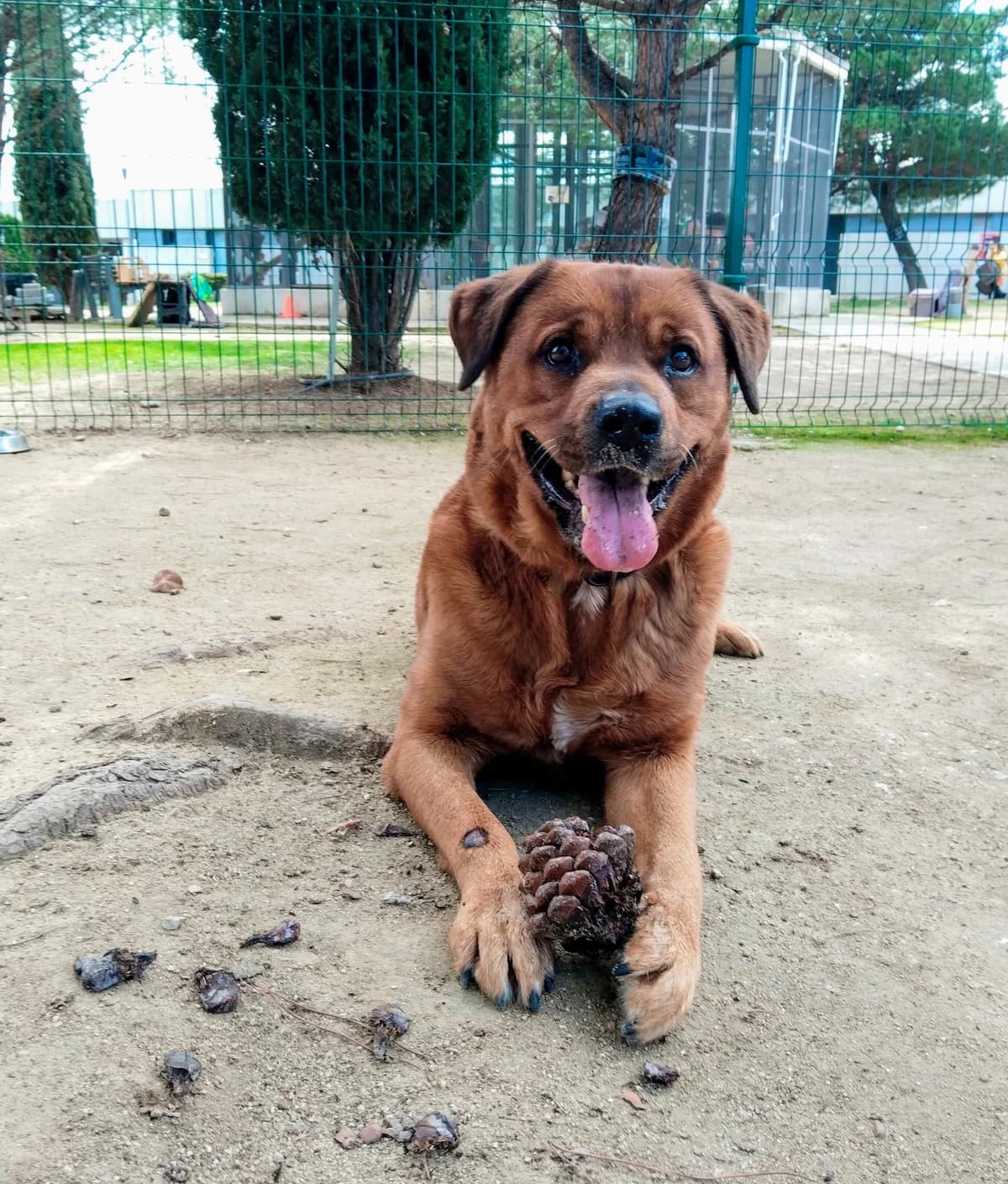
Adopt Il cane dominante non esiste
Mixed Breed · Female
The dominant dog is the one that triggers the instinctive, ignorant desire to submit it. When meeting dogs on walks or in off-leash areas or at a friend's house, it is very common to hear certain behaviors judged as "normal" because they are carried out by a dog considered and evaluated as "dominant": this happens with the dog (maybe even a female) that mounts another dog or a human's leg; or with the dog that keeps everyone away from the bench where the human companion is sitting; it happens with the dog that completely ignores pleas not to pull on the leash; or with the dog that never relaxes and constantly watches the surroundings. All these situations actually have precise ethological explanations, although they differ from each other, in which dominance is not even involved. Dominance and submissiveness, indeed, are concepts that describe "power relations" between individuals within a social group or a stable relationship: they qualify, that is, the status of a subject and therefore are useful to understand social dynamics, but not to label individual behaviors of the family dog that, in certain situations, simply expresses one of the many typical behaviors of the species. This is also true for aggression, which is not necessarily an expression of dominance: indeed, the motivation to attack (aggression) is influenced by several factors (genetics, experiences, health, socialization, fear, predatory and territorial motivation, etc.) and is part of the individual dog's personality, while dominance is not a trait of personality but an aspect of a (asymmetric) relationship that varies according to the context or the relational situation the dog is maintaining. Therefore, once it is understood that it is not a "dominant dog" that wants to sleep on the bed or that defends food or toys, or even that goes through the door first, it will perhaps be easier for the human to set aside their instinctive, ignorant desire to submit the dog and engage in a less simplified reading of its behaviors. In the human-dog relationship, dominance and submission have always been used to justify coercive methods and punishments as tools for asserting anthropocentric superiority and the human animal's will over the non-human animal: instead, what is really needed in the relationship with one's cohabiting animal is people who are authoritative, expressing a balance between knowledge, empathy and listening to the needs and requirements of their animal companion, rejecting dominance, imposition and authoritarianism.
Read original (it)
Il cane dominante è quello che attiva l'istintivo, ignorante desiderio di sottometterlo. Nell’incontrare cani in passeggiata o in area sgambo o nell'abitazione di un conoscente capita molto spesso di sentire giudicare alcuni comportamenti come “normali” perché messi in atto da un cane considerato e valutato come “dominante”: succede con il cane (magari anche femmina) che monta un altro cane o la gamba di un umano; oppure con il cane che tiene tutti lontani dalla panchina dove è seduto il compagno umano; succede col cane che non ascolta minimamente le suppliche di non tirare al guinzaglio; oppure con il cane che non si rilassa mai e sorveglia incessantemente il contesto. Tutte queste fattispecie hanno, in realtà, spiegazioni etologiche precise ancorchè diverse tra loro, in cui la dominanza non viene proprio in gioco. Dominanza e subalternità, infatti, sono concetti che descrivono le “relazioni di potere” tra individui all’interno di un gruppo sociale o di una relazione stabile: qualificano, cioè, lo status di un soggetto e, quindi, sono utili a comprendere le dinamiche sociali, ma non per dare un’etichetta a singoli atteggiamenti del cane di famiglia che in determinate situazioni si esprime semplicemente con uno dei tanti comportamenti tipici della specie. E’ così anche per l’aggressività, che non è necessariamente espressione di dominanza: infatti, la motivazione ad aggredire (aggressività) è influenzata da diversi fattori (genetica, esperienze vissute, stato di salute, socializzazione, paura, motivazione predatoria e territoriale e così via) e fa parte della personalità del singolo cane, mentre la dominanza non è un tratto della personalità ma un aspetto di una relazione (asimmetrica) che varia in ragione del contesto o del rapporto relazionale che il cane sta intrattenendo. Dunque, una volta capito che non è un “cane dominante” quello che vuole dormire sul letto o che difende il cibo o i giochi o, addirittura, quello che oltrepassa per primo la porta di casa, sarà forse più facile per l’umano di turno mettere da parte il proprio istintivo, ignorante desiderio di sottomettere il cane e impegnarsi in una lettura meno semplificata dei suoi comportamenti. Nella relazione uomo-cane, dominanza e sottomissione sono servite, da sempre, a giustificare metodi coercitivi e punizioni come strumento di affermazione antropocentrica della superiorità e del volere dell’animale umano sull'animale non-umano: invece, ciò di cui c’è davvero bisogno nel rapporto con il proprio animale convivente è di persone autorevoli, che esprimono un equilibrio tra competenza, empatia e ascolto dei bisogni e delle esigenze del proprio compagno animale, rifiutando dominanza, imposizione e autoritarismo.
Free account — 10 contacts included
Listed 1 month ago